Rug Manufacturing Process in India: How Handmade Rugs Are Made
A technical walkthrough of how handmade rugs move from design brief to finished product in India — covering material selection, yarn preparation, colour development, construction methods including hand knotting, hand tufting and flatweaving, and the washing, finishing and inspection stages that follow.
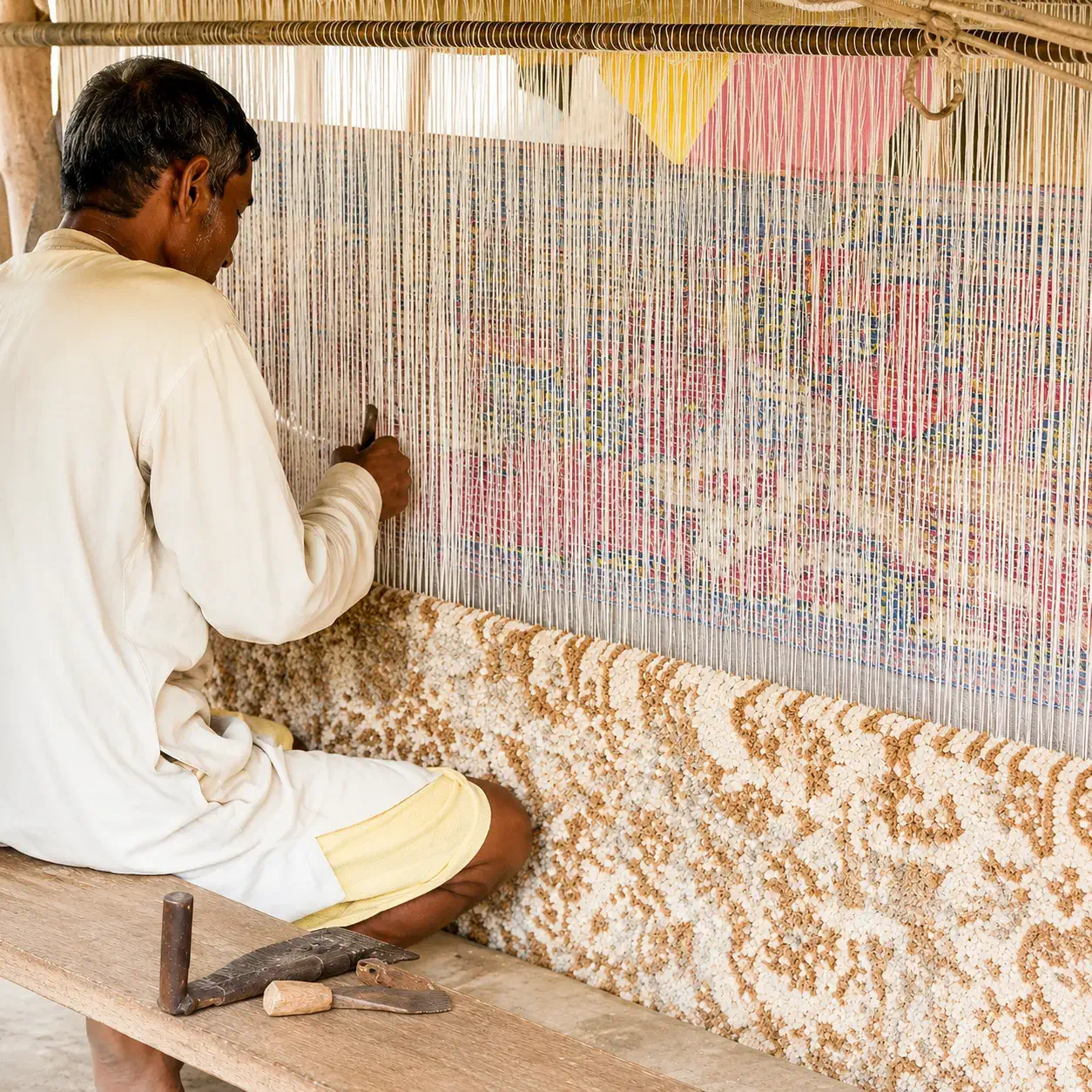
How Are Rugs Manufactured in India?
Rugs are manufactured in India through a sequence that generally moves from design development and material selection through yarn preparation, colour development, a primary construction stage, and finishing. The primary construction stage differs by rug type: hand-knotted rugs are built by tying individual knots around warp threads, hand-tufted rugs are made by punching yarn through a foundation cloth, and flatweave rugs are formed by interlacing warp and weft without a raised pile. After construction, most rugs are washed, dried, and finished — through processes such as shearing, carving, or binding — before a final quality inspection and packing.
At a Glance
A Rug Starts Before the Loom
Manufacturing decisions are made well before any yarn is touched. A design brief — whether from an interior designer, a hospitality procurement team, or an internal collection plan — sets constraints that determine which construction method is even viable, which materials can be used, and how long production will realistically take.
A complete brief typically defines the rug's dimensions, the pattern or motif, the colour palette, the material, and the intended construction — hand-knotted, hand-tufted, flatweave, or another method. It also needs to account for end use: a rug for a low-traffic residential bedroom has different performance requirements than one for a hotel lobby or a commercial corridor.
Performance requirements can include expected foot traffic, whether the rug needs to sit under furniture, exposure to sunlight, and any flammability or commercial-use standards relevant to the destination market. These requirements influence fibre choice and construction before design work is finalised.
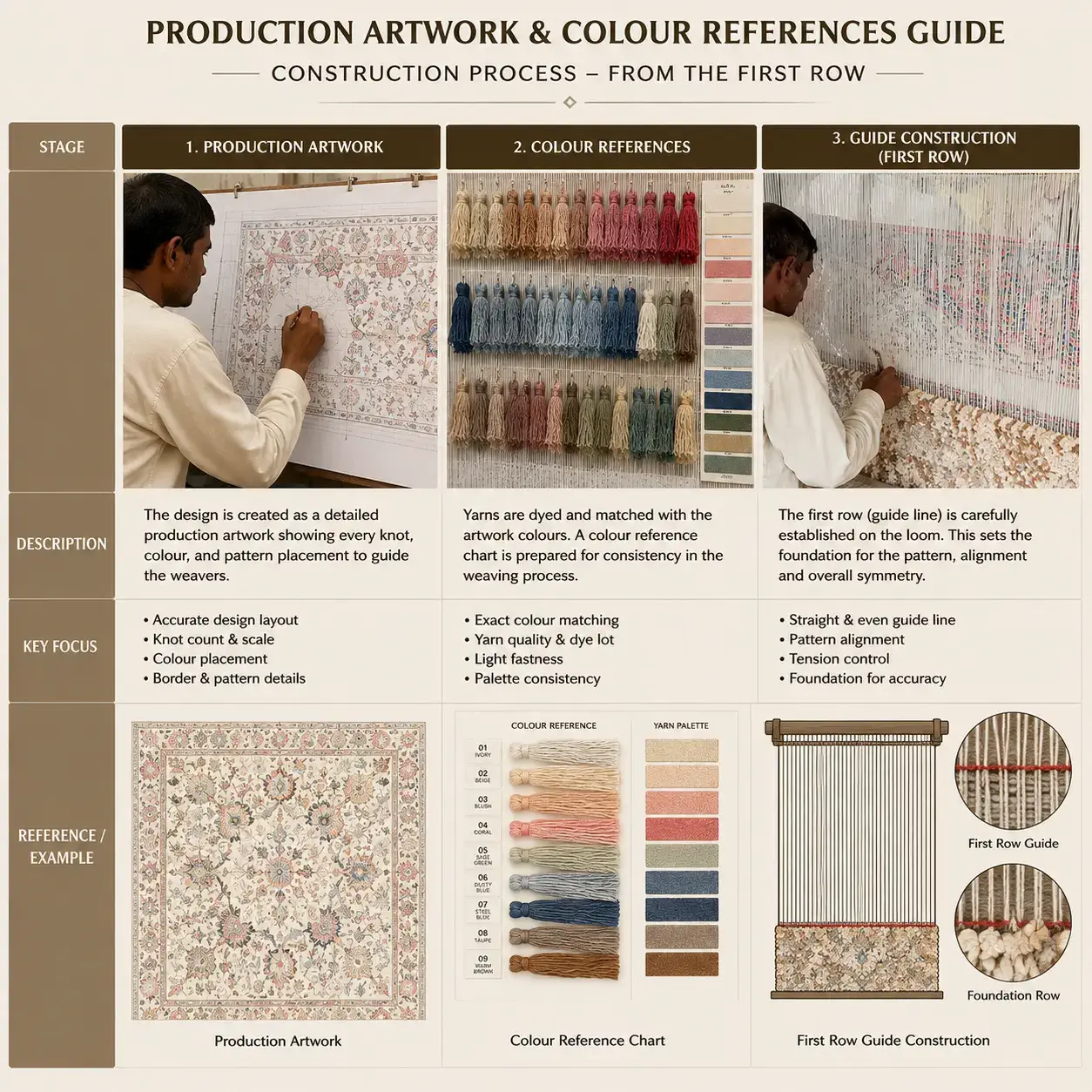
Once a brief is confirmed, it is translated into production-ready artwork — a scaled design file with an exact colour reference for each element of the pattern. This artwork becomes the reference document construction is measured against, from the first knot to final inspection.
Sampling is the step that connects the brief to actual production. Before committing to bulk manufacturing, a sample section or a full sample rug is typically produced so the buyer can confirm colour, texture, pile height, and pattern accuracy against the original brief. The custom manufacturing section below covers this stage in more detail.
Choosing the Rug Fibre
Material choice shapes almost everything downstream — which construction methods are viable, how the rug feels underfoot, how it ages, and how it should be cared for.
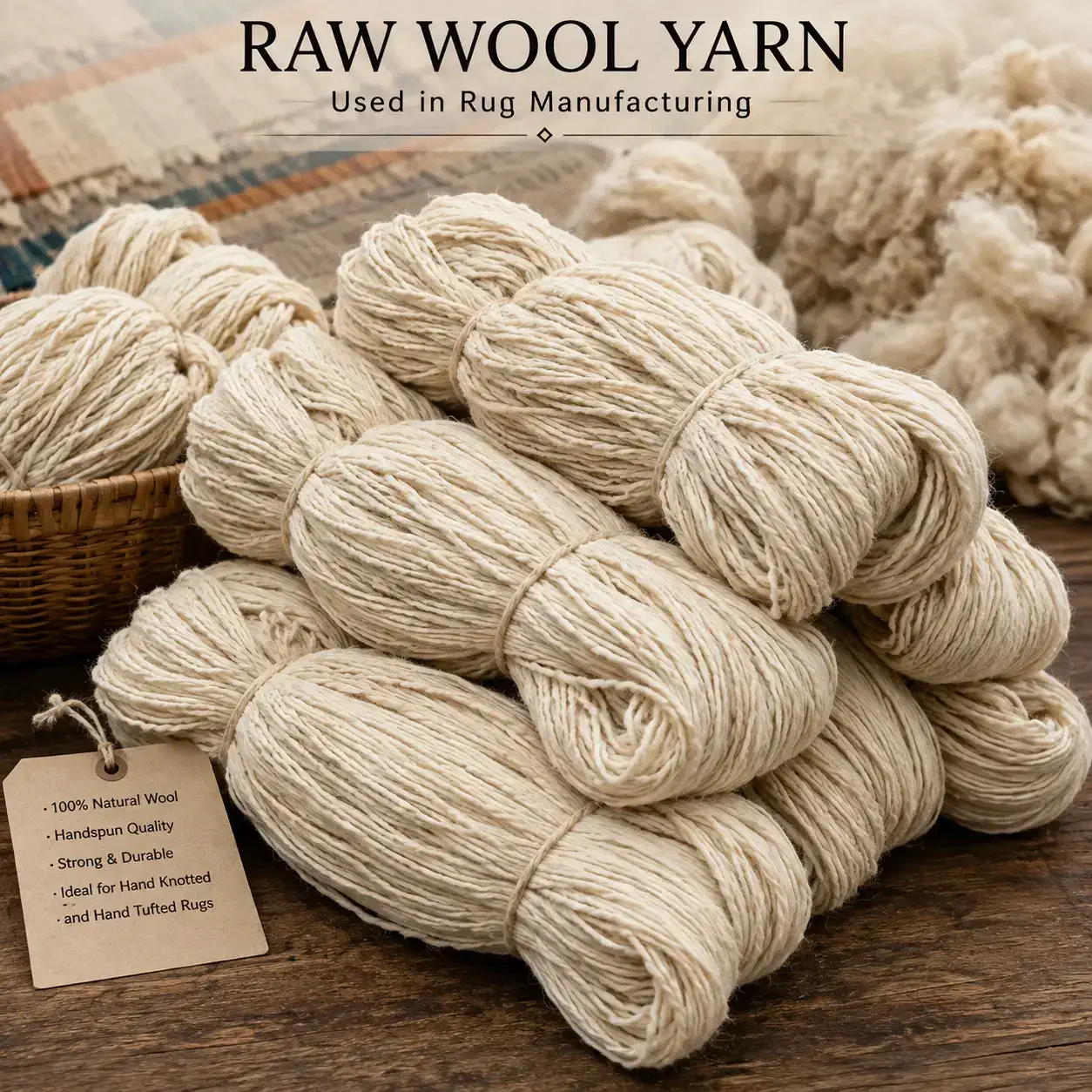
Wool
A resilient, naturally elastic fibre widely used for pile in hand-knotted and hand-tufted rugs. Takes dye well and tends to resist crushing.
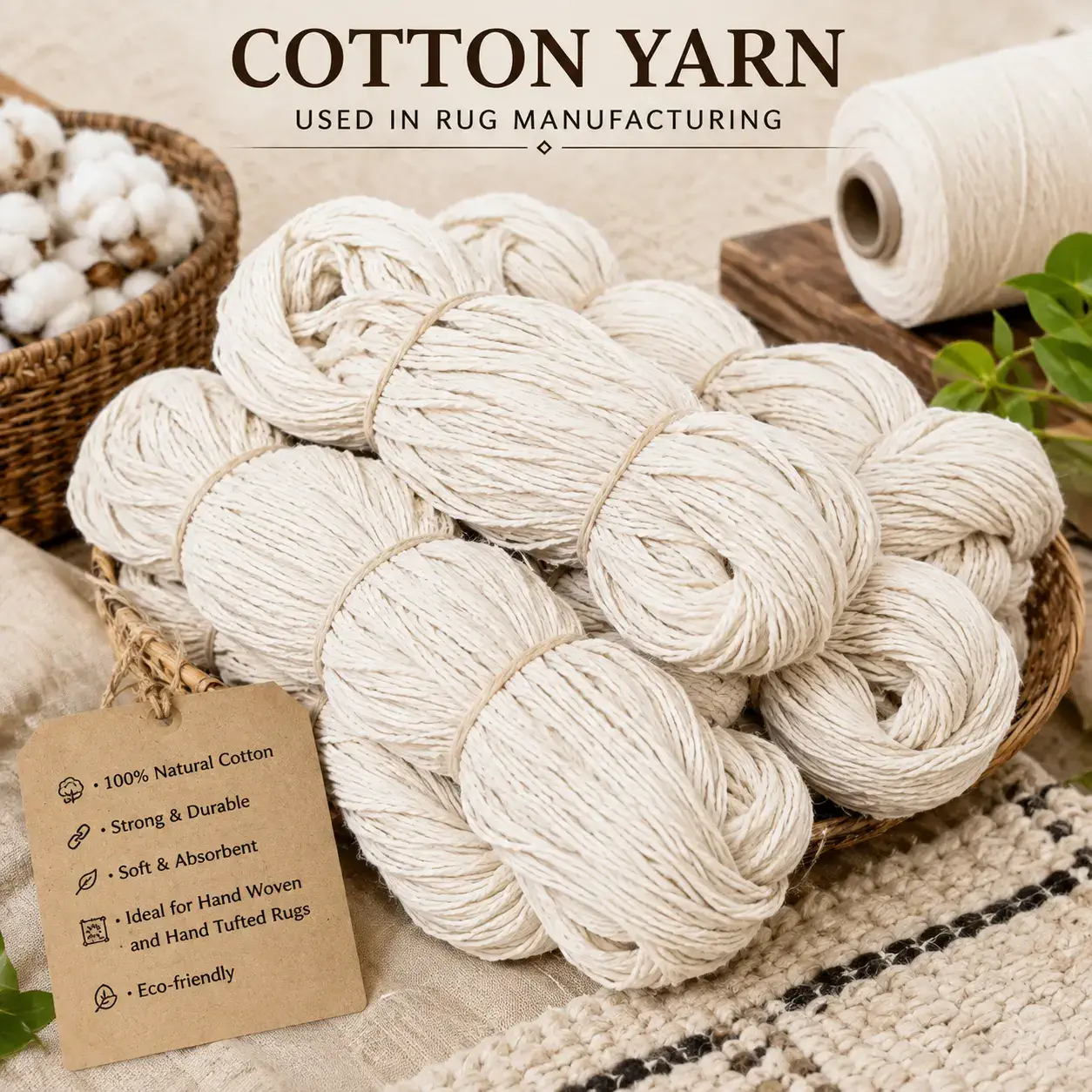
Cotton
Commonly used for warp and foundation because of its strength and dimensional stability. Also used as the primary pile fibre in some flatweaves.
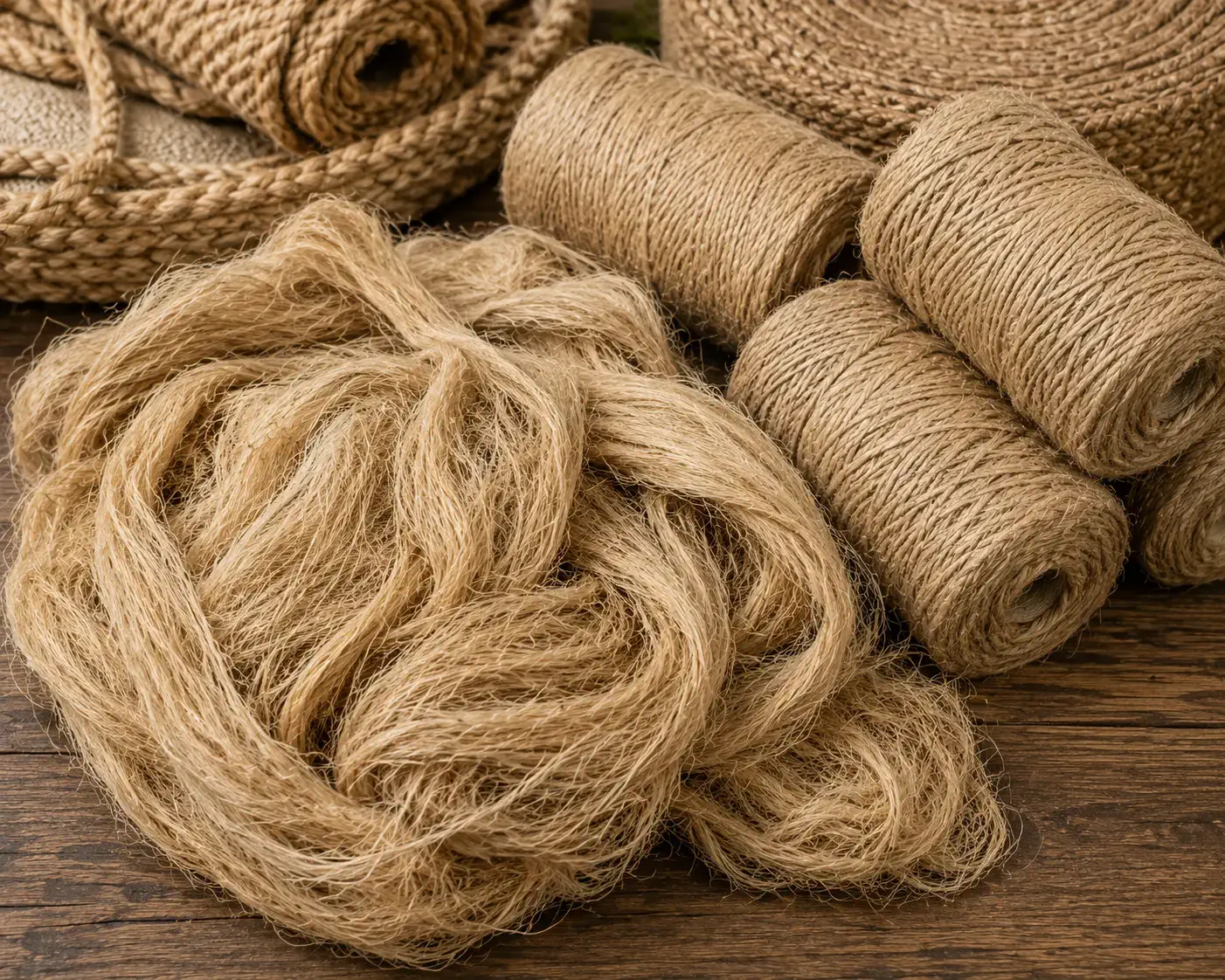
Jute
A coarse natural bast fibre with a distinct texture, generally used in flatweave and casual constructions rather than fine knotted pile.
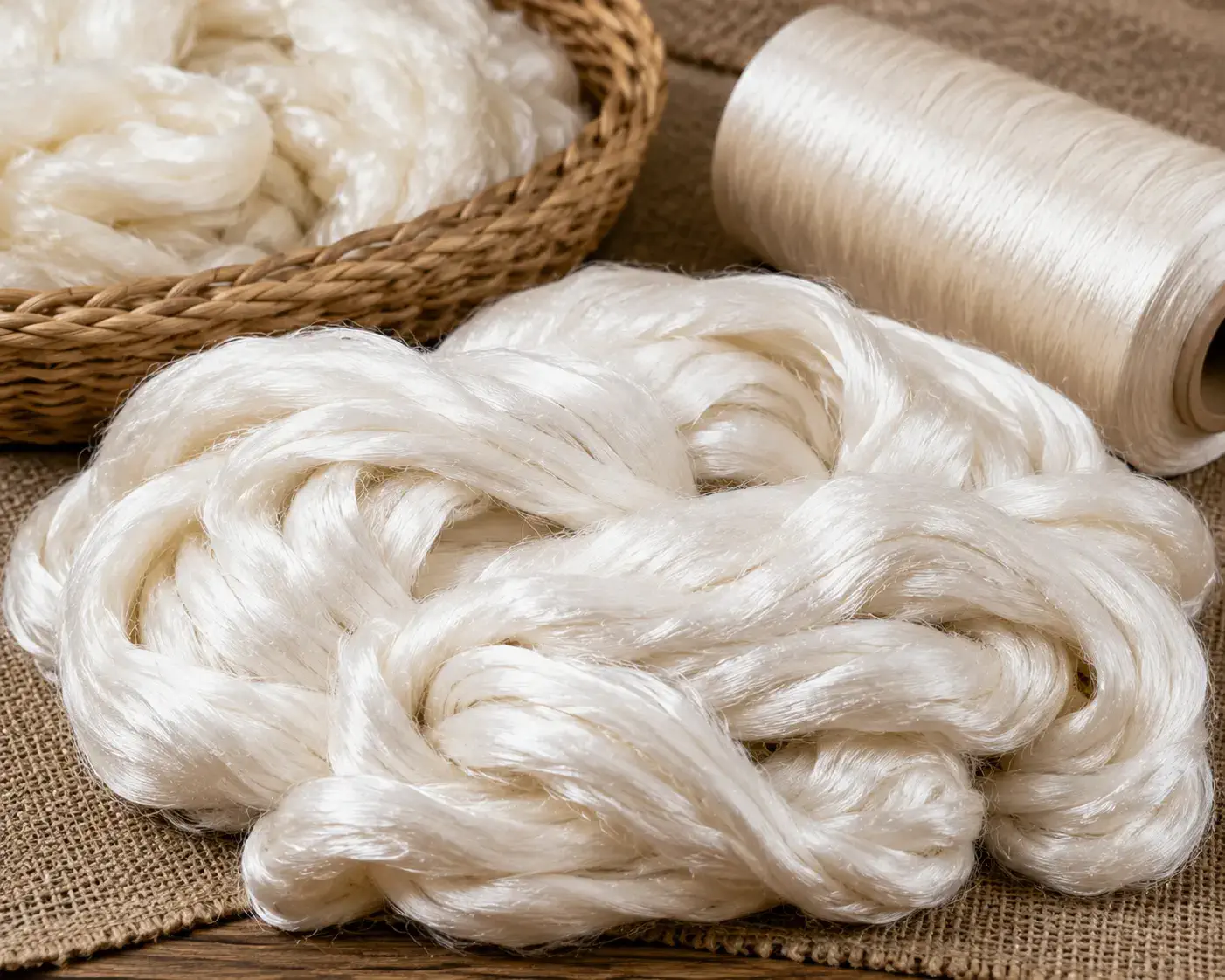
Viscose
A semi-synthetic fibre often blended in to create sheen and highlight design detail. Generally softer and less abrasion-resistant than wool.
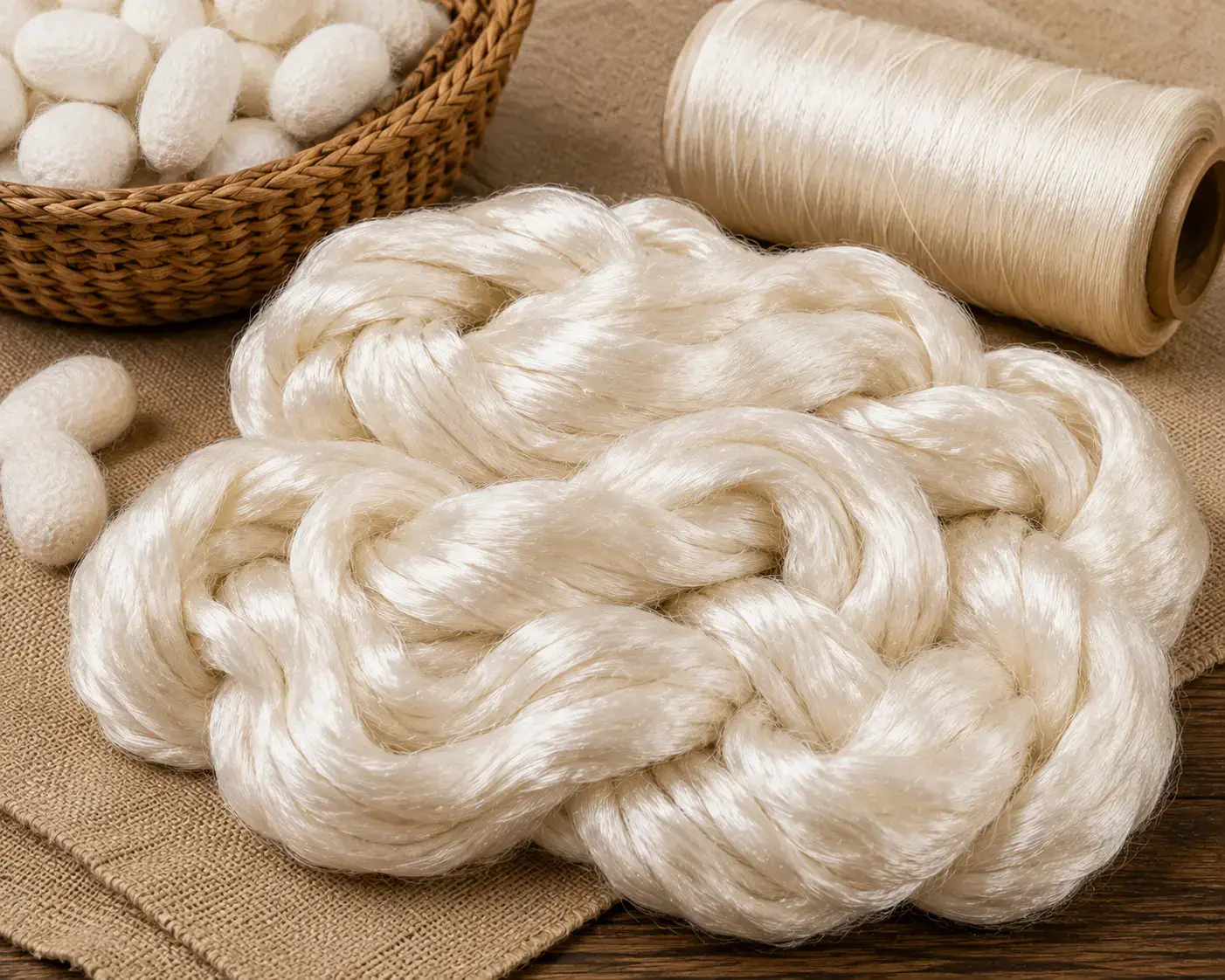
Silk
A fine, high-sheen fibre typically used sparingly to accent motifs within a wool ground, given its cost and delicacy relative to wool.
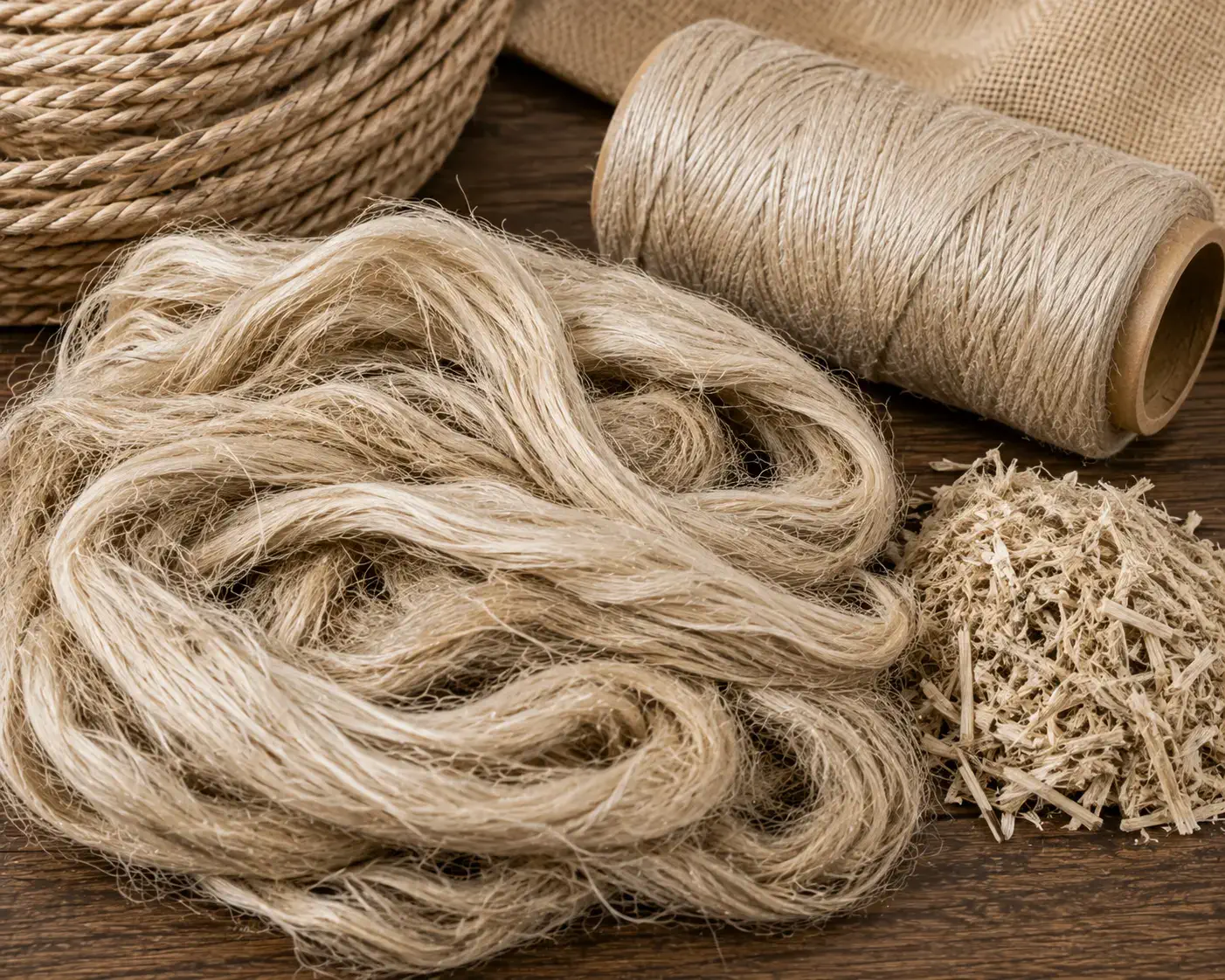
Hemp
A durable bast fibre with a texture broadly comparable to jute, sometimes used in natural-fibre flatweaves and blended constructions.
Material Comparison
| Material | Surface Character | Typical Role | Manufacturing Considerations | Potential Applications |
|---|---|---|---|---|
| Wool | Soft, resilient, matte to lightly lustrous | Primary pile in knotted and tufted rugs | Takes dye well; natural elasticity aids pile recovery | Living areas, bedrooms, moderate-traffic settings |
| Cotton | Firm, even, low sheen | Warp/foundation; pile in some flatweaves | Strong and dimensionally stable under tension on the loom | Flatweaves, foundations, casual constructions |
| Jute | Coarse, textured, natural tone | Flatweave and natural-fibre constructions | Coarser hand than wool or cotton; not typically used for fine knotted pile | Casual and natural-material interiors |
| Viscose | Soft, high sheen | Sheen accents, sometimes full pile | Less abrasion-resistant than wool; sheen highlights design detail | Lower-traffic decorative pieces, sheen-driven designs |
| Silk | Fine, high lustre | Accent detailing within wool ground | Delicate relative to wool; typically used sparingly given cost and fragility | Fine detailing, accent motifs, statement pieces |
| Hemp | Coarse, durable, natural tone | Natural-fibre flatweaves and blends | Texture broadly comparable to jute | Natural and casual-material interiors |
This table describes general fibre characteristics, not blanket performance guarantees. Suitability for a specific application should be confirmed against the intended use.
Getting Fibre Ready for the Loom
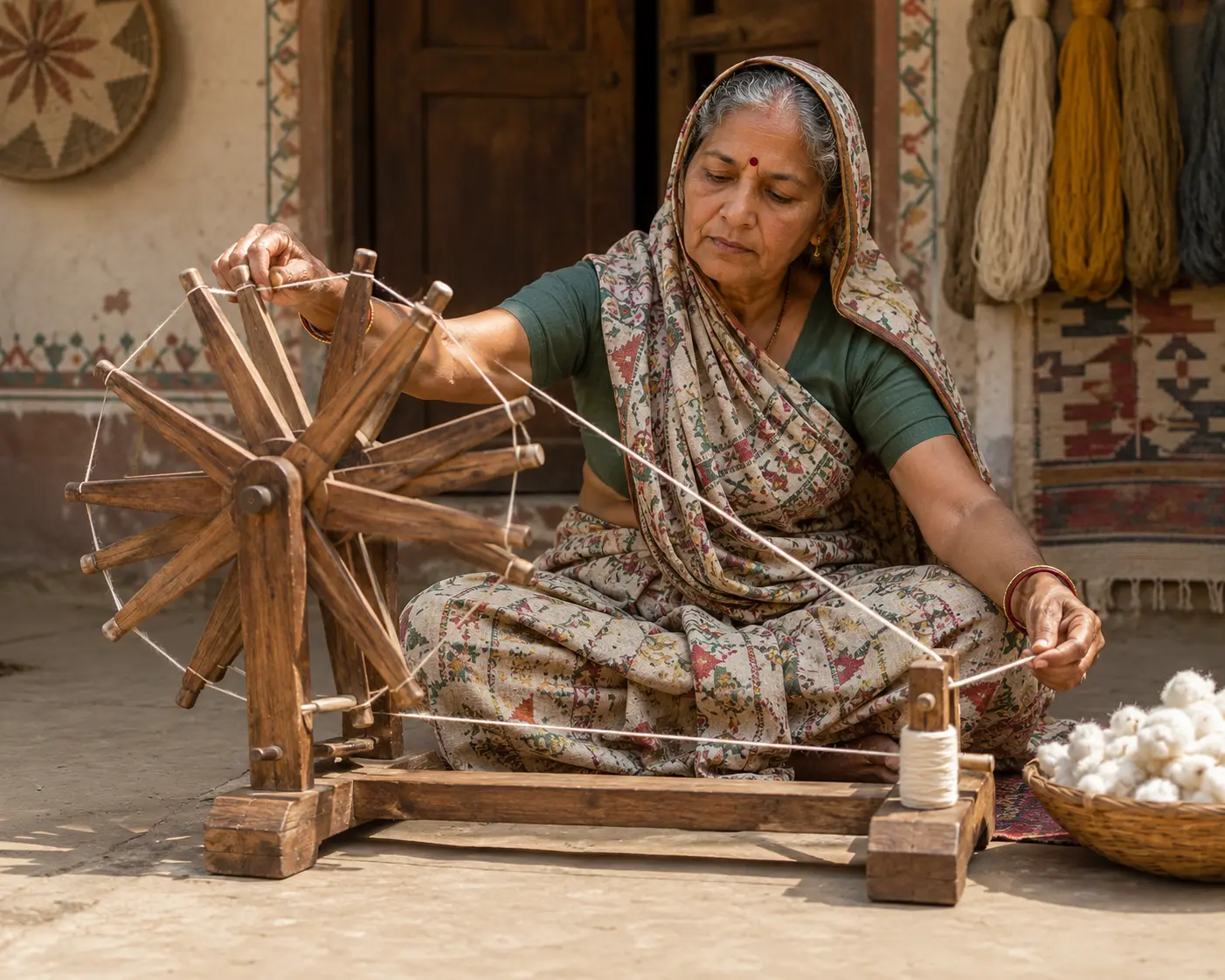
Raw fibre is not loom-ready. Depending on the material and construction, yarn preparation can include spinning fibre into thread, plying multiple strands together for strength or thickness, and winding yarn onto bobbins, cones or hanks sized for the equipment being used.
Preparation requirements vary by material and construction. Wool destined for hand-knotted pile is typically prepared to a specific thickness and ply to achieve the intended knot density and pile character. Cotton for warp threads is prepared for tensile strength and consistency, since warp yarn holds the entire structure under tension throughout construction. Flatweave weft yarn preparation differs again, since it does not need to withstand the same knotting tension as pile yarn.
Inconsistent yarn thickness or twist can produce uneven pile height or an irregular surface once the rug is complete — a flaw that finishing processes like shearing can only partially correct. Getting preparation right reduces the amount of correction needed later.
Colour Development and Dyeing
Colour accuracy is where custom manufacturing most often succeeds or fails — and where communication between buyer and manufacturer matters most.
Once a design's colour palette is confirmed, each colour needs to be developed as an actual dyed yarn, not just a reference on a screen or a printed card. This typically starts with matching a colour reference — a Pantone-style swatch, a physical material sample, or an existing rug — and dyeing a small trial batch to check the result against that reference.
A dye lot is the batch of yarn dyed together in a single dyeing session. Because dyeing is a chemical and physical process, colour can vary slightly between dye lots even when the same recipe is used, which is why manufacturers track dye lot numbers and generally try to construct a single rug from yarn drawn from a consistent lot.
A strike-off — a small dyed or printed sample used to confirm a colour or pattern before committing to a larger production run — is the checkpoint most buyers interact with directly. Reviewing and approving strike-offs before bulk dyeing begins is one of the most effective ways to avoid a costly colour mismatch discovered only after a rug is fully constructed.
Screen colours are not a reliable reference for dye matching — monitor calibration, lighting and colour profiles all introduce variation. When exact colour matching matters for a project, a physical colour sample or an approved strike-off gives a far more dependable reference than a digital swatch alone.
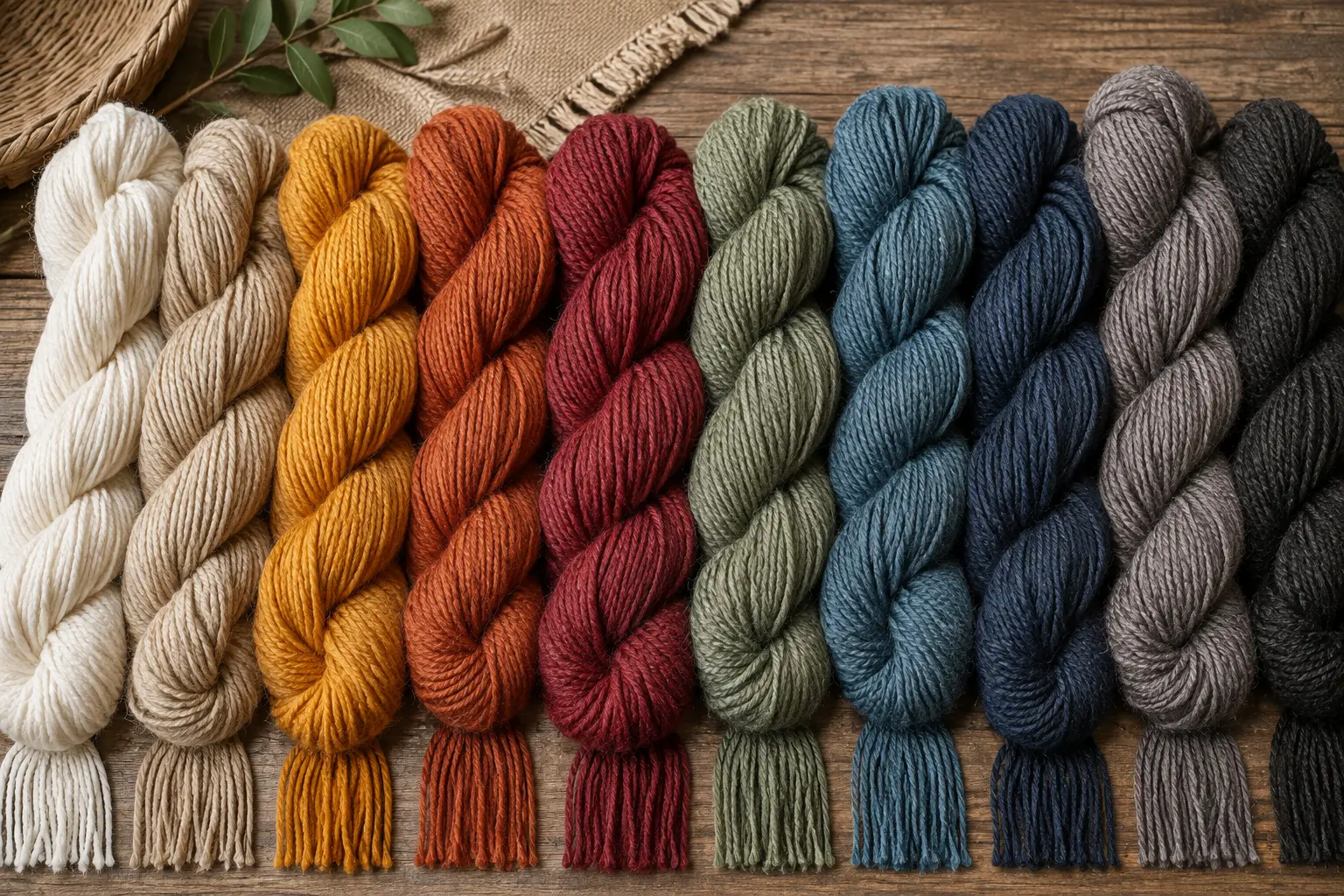
Illustrative palette shown for reference only — actual dye lots are matched against the buyer's approved colour standard and tracked individually per production run.
How a Rug Is Actually Constructed
"Handmade rug" is not one technique. Six broadly distinct construction methods are in common use, each with a different structure, a different manufacturing process, and a different reason to choose it.
A hand-knotted rug is constructed by tying individual yarn knots around warp threads, while a flatweave structure is formed primarily through interlacing warp and weft without a conventional raised knotted pile.
A. Hand Knotted
Individual knots tied by hand around warp threads. Raised pile, highest manual input, no adhesive required for structural integrity.
B. Hand Tufted
Yarn punched through a foundation cloth with a tufting tool. Raised pile, adhesive and secondary backing typically required.
C. Flatweave
Warp and weft interlaced on a loom. No conventional raised pile; typically thinner and reversible or near-reversible.
D. Handloom
Woven on a manually operated loom using techniques distinct from fine hand knotting; construction detail varies by product.
E. Braided
Strands of fabric or yarn braided and then coiled or stitched together, rather than woven on a loom.
F. Printed
A pattern applied to a woven or felted base rather than built into the structure through knotting or weaving.
Hand-Knotted Rugs
What It Is
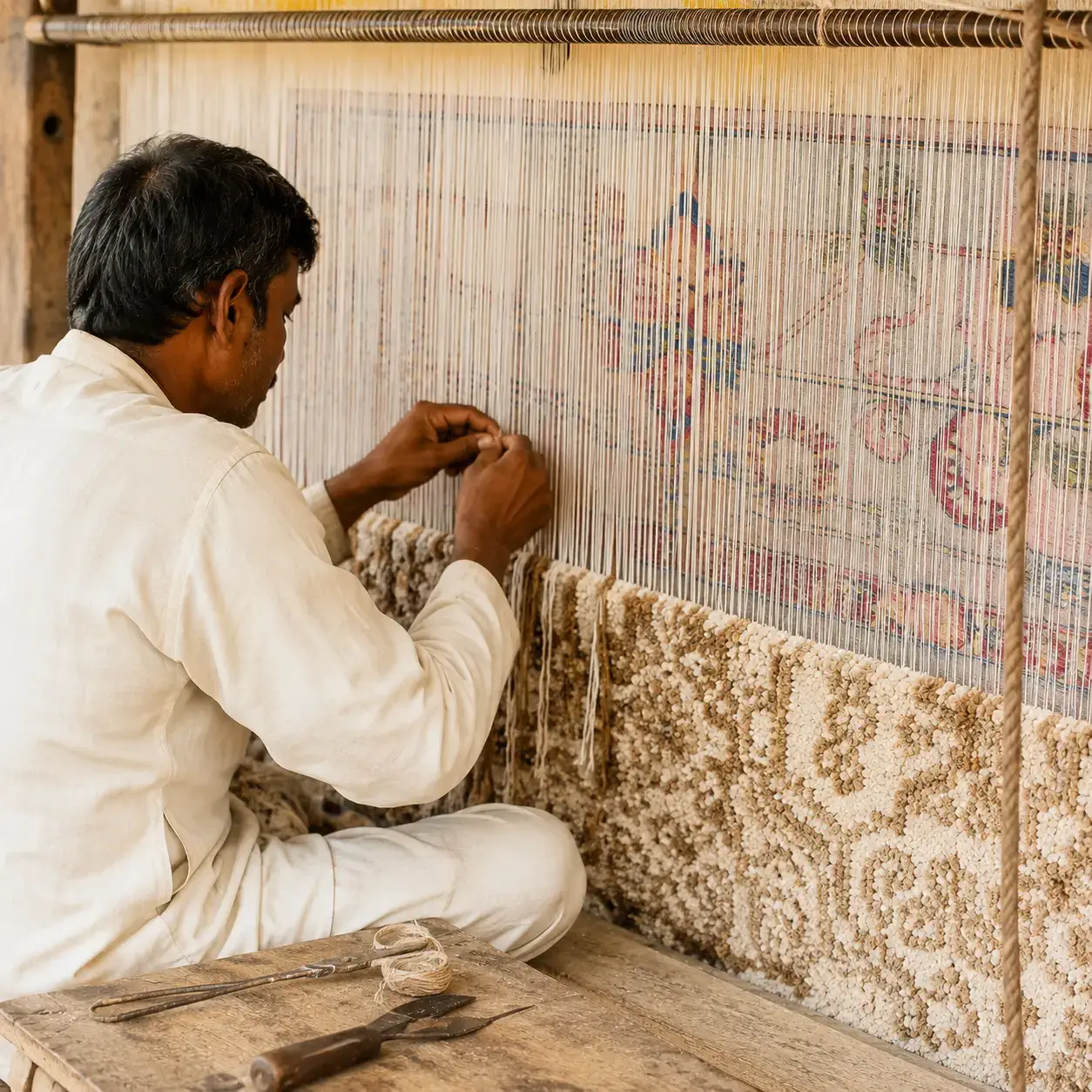
A hand-knotted rug is built by tying individual yarn knots by hand around the warp threads stretched on a loom, row by row, from the bottom of the rug to the top.
How It Is Made
Warp threads are stretched vertically under tension on the loom, forming the structural foundation. Working from the design, the artisan ties a knot of coloured yarn around a pair of warp threads, following the pattern colour by colour and knot by knot. After a row of knots is complete, one or more passes of weft yarn are woven horizontally across the warp and beaten down to lock the row of knots into place. This cycle — knot, knot, knot, weft pass, beat down — repeats row after row until the rug reaches its full length.
Once knotting is complete, the pile is trimmed to an even height, and the rug typically proceeds to washing and finishing, covered in the After Construction section below.
Every knot in a hand-knotted rug is tied individually by hand, and the total number of knots scales directly with both the rug's size and its knot density — a finer, more detailed design requires more knots per square inch to render accurately. Unlike tufting, where a tool inserts yarn mechanically, knotting has no equivalent shortcut: each knot is a discrete manual action. This is a structural characteristic of the technique, not a marketing claim — [VERIFICATION REQUIRED: specific production-time figures are product- and workshop-specific and are not stated here as a general rule].
Hand-Tufted Rugs
- Foundation
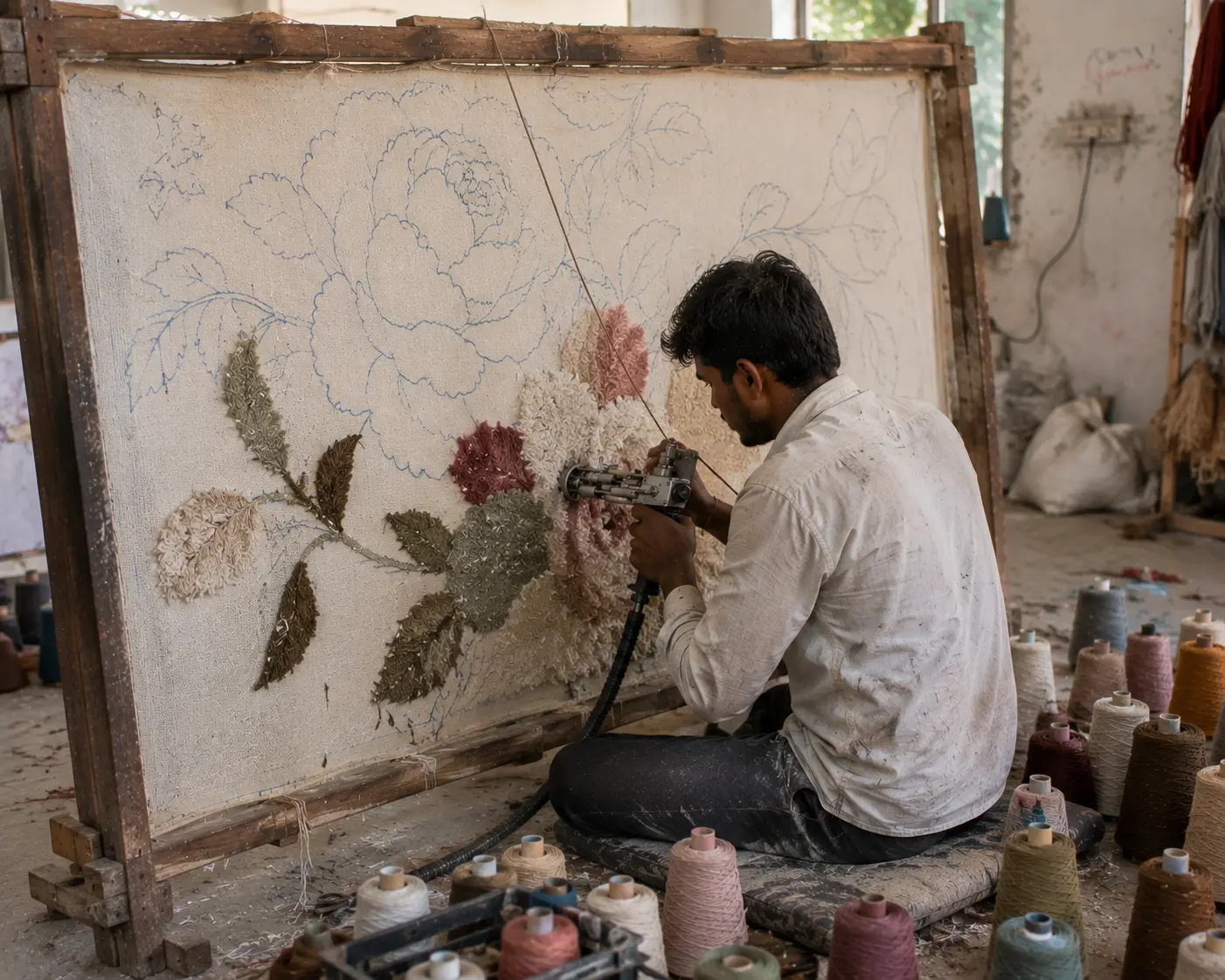
- A woven cloth stretched tightly on a frame, onto which the design is traced or printed as a guide.
- Design Transfer
- The pattern is marked directly onto the foundation so the artisan can follow colour and shape boundaries while tufting.
- Yarn Insertion
- A hand-held or pneumatic tufting tool pushes yarn through the foundation from the front, forming loops or cut pile on the working side.
- Backing
- Once tufting is complete, adhesive is typically applied to the reverse to lock yarn in place, and a secondary backing cloth is usually attached.
What It Is
A hand-tufted rug is made by punching yarn through a foundation cloth using a tufting tool, following a design outline traced or printed onto the cloth — a different mechanism from tying knots around warp on a loom.
How It Is Made
The foundation cloth is stretched taut on a frame and the design is transferred onto it. Working from the front of the frame, the artisan guides the tufting tool through the cloth, inserting yarn in loops or cut strands according to the pattern and colour plan. Once the entire design has been tufted, the surface is checked and any loops are typically cut for a uniform pile.
The back of the foundation is then coated with an adhesive to secure the inserted yarn permanently, and a secondary backing cloth is generally applied over the adhesive layer for structural stability and a finished reverse side. The pile surface is then sheared for an even height before finishing continues.
Unlike hand knotting, hand tufting does not rely on the knot itself for structural integrity — the adhesive and secondary backing are what hold the yarn in place. This is a fundamentally different structural approach, not simply a faster version of knotting.
Hand Knotted vs Hand Tufted
| Characteristic | Hand Knotted | Hand Tufted |
|---|---|---|
| Pile formed by | Individual knots tied around warp threads | Yarn punched through a foundation cloth |
| Structural support | The knot itself, secured by weft passes | Adhesive coating plus secondary backing |
| Tool used | Hand-tied, no mechanical tool required | Hand-held or pneumatic tufting tool |
| Backing cloth | Not required for structural integrity | Typically required |
| Reverse side | Warp and weft structure visible, often shows the pattern faintly | Secondary backing cloth, pattern not visible |
| Relative production speed | Generally slower per square metre | Generally faster per square metre |
Flatweave Rugs
What It Is
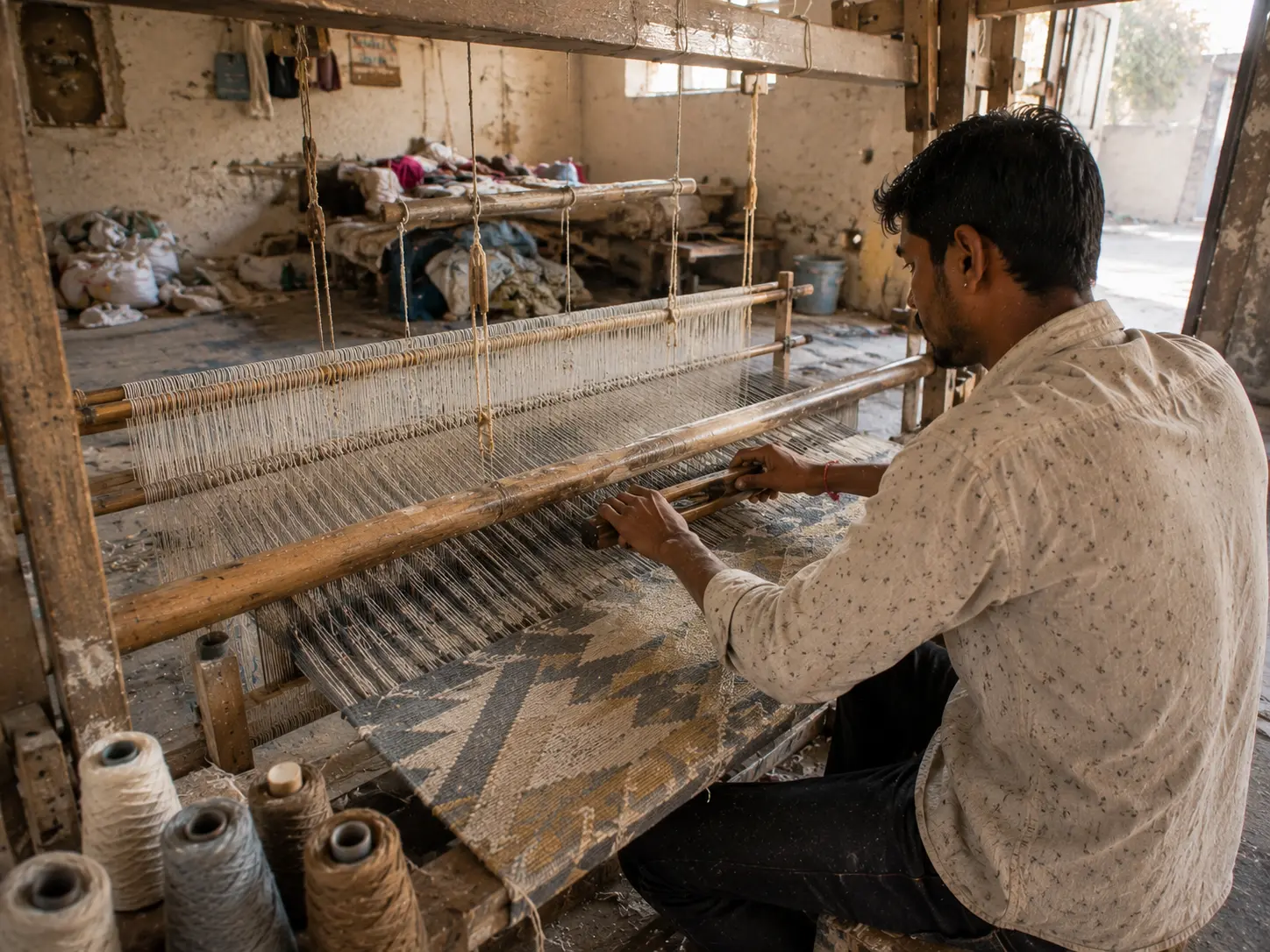
A flatweave rug is formed by interlacing warp and weft yarns on a loom without creating a raised knotted pile — the surface is built entirely through the weave structure itself.
How It Is Made
As with other loom constructions, warp threads are stretched under tension first. The weft yarn is then passed over and under the warp threads in a repeating sequence, building the fabric row by row. Colour changes in the weft yarn — rather than knotted pile — create the pattern, which means the design and the structure are formed by the same action.
Because there is no pile to trim or shear, flatweave rugs generally move to washing and finishing more directly than knotted or tufted constructions, though edge finishing and fringe treatment still apply.
Because flatweave construction has no raised pile, the rug is typically thinner and reversible or near-reversible compared with hand-knotted or hand-tufted rugs of similar size.
Handloom, Braided and Printed Construction
Three further construction methods are common enough to warrant their own explanation — and important to distinguish from hand knotting, since "handmade" covers all of them.
Handloom
Handloom rugs are woven on a manually operated loom, using weaving techniques distinct from the row-by-row knotting used in hand-knotted construction. The specific weave structure and finishing steps vary by product design, and the term covers a range of woven techniques rather than one fixed method.
Braided
Braided rugs are constructed by braiding strands of fabric or yarn together and then coiling and stitching the braided rope into the final rug shape, rather than being built on a loom. This produces a distinctly different texture and construction logic from any loom-based method.
Printed
Printed rugs apply a pattern onto a woven or felted base surface rather than building the design into the structure through knotting or weft colour changes. The base construction and the surface pattern are produced as two separate stages rather than one integrated process.
What Happens After a Rug Leaves the Loom?
Construction is not the final stage. Washing, drying and finishing are what turn a constructed textile into a rug ready for a room.
Washing
Most rugs are washed after construction to remove loose fibre, dust, and any excess dye that did not fully bond to the yarn. Washing also softens the pile and helps set the final texture. The specific washing method can differ by material and construction — a wool hand-knotted rug and a cotton flatweave do not necessarily require identical treatment.
Stretching and Drying
After washing, the rug is typically stretched to correct its dimensions and squared edges, then dried — usually laid flat — to set its final shape. This step matters for dimensional accuracy: a rug that dries unevenly or without proper stretching can end up slightly out of square.
Shearing and Carving
Shearing trims the pile to a uniform height across the entire rug surface, correcting any inconsistency from the knotting or tufting stage. Carving is a distinct process: it involves cutting along the outlines of a pattern to create a sculpted, dimensional effect where the design sits slightly raised or recessed relative to the surrounding pile. Not every rug is carved — it is a specific design choice applied where the pattern calls for that dimensional definition.
Binding, Fringing and Backing
Edge treatment depends on construction. Some rugs receive a fringe — an extension of the warp threads finished and secured at the ends. Others are bound, with a fabric or yarn edge stitched around the perimeter for durability and a clean finish. Tufted rugs, as covered above, receive a secondary backing as part of construction rather than as a separate finishing choice.


Finishing steps are also where inconsistencies from earlier stages get caught and corrected where possible. A pile height variation from knotting, for instance, is generally addressed here — which is one reason finishing is treated as a quality-relevant stage rather than a purely cosmetic one.
How Is a Finished Rug Inspected?
Before a finished rug is packed, it is typically checked against the approved design and specification. Standard inspection points include dimensions, design alignment, colour consistency against the approved sample, surface and pile evenness, edge and fringe finishing, and overall cleanliness. Exact inspection requirements can vary by product type and buyer specification, and a buyer with specific requirements should confirm them directly with the manufacturer.

Inspection Checklist
-
DimensionsMeasured length and width against the approved specification.
-
Design AlignmentPattern position and proportion checked against the approved artwork.
-
Surface ConsistencyPile height and surface texture checked for evenness.
-
Colour ConsistencyCompared against the approved sample or dye lot standard.
-
EdgesEdge lines checked for straightness and consistent finishing.
-
FinishingFringe, binding, shearing or carving checked against specification.
-
BackingWhere applicable — checked for secure adhesion and even application.
-
CleanlinessSurface checked for residual dust, loose fibre or dyeing residue.
-
Packing SpecificationConfirmed against buyer requirements before dispatch.
Exact inspection requirements can vary by product and buyer specification.
Process Stage by Construction Type
A single reference table showing where each manufacturing stage applies — and where it doesn't — across all six construction methods.
| Process Stage | Hand Knotted | Hand Tufted | Flatweave | Handloom | Braided | Printed |
|---|---|---|---|---|---|---|
| Design | ✓ | ✓ | ✓ | ✓ | ✓ | ✓ |
| Foundation / Loom | ✓ | ✓ (frame) | ✓ | ✓ | — | Varies |
| Yarn Preparation | ✓ | ✓ | ✓ | ✓ | ✓ | Varies |
| Dyeing (where applicable) | ✓ | ✓ | ✓ | ✓ | ✓ | Varies (may be printed) |
| Primary Construction | Knotting | Tufting | Weaving | Weaving | Braiding | Printing on base |
| Pile | ✓ Raised | ✓ Raised | — No conventional pile | Varies | — No conventional pile | Varies by base |
| Backing Required | — | ✓ Typically | — | Varies | Varies | Varies by base |
| Washing | ✓ | ✓ | ✓ | ✓ | Varies | Varies |
| Shearing | ✓ | ✓ | — | Varies | — | Varies |
| Carving | Varies (design-dependent) | Varies (design-dependent) | — | — | — | — |
| Edge Finishing | ✓ | ✓ | ✓ | ✓ | ✓ | Varies |
| Inspection | ✓ | ✓ | ✓ | ✓ | ✓ | ✓ |
How Custom Rug Manufacturing Works
For interior designers, architects, hospitality procurement teams, retailers and importers, custom manufacturing follows a defined sequence from brief to dispatch.
Brief
Size, design, colour and construction requirements confirmed.
Artwork
Design translated into production-ready reference artwork.
Construction
Knotted, tufted, flatweave or another method selected.
Fibre
Material selected against performance and design requirements.
Colour
Palette developed and matched to reference standard.
Sampling
Sample section or full sample rug produced.
Approval
Buyer reviews and signs off the sample as production standard.
Production
Bulk manufacturing against the approved sample.
Finishing & QC
Washing, finishing and inspection against specification.
Packing
Prepared and packed to buyer packing specification.
Custom manufacturing is built around the sample. Once a brief is confirmed and artwork is developed, construction method and fibre are selected based on the brief's performance and design requirements, and colour is developed to match the buyer's reference standard. A sample — either a representative section or a full rug — is then produced.
The buyer's approval of that sample is the point production actually locks in: the approved sample becomes the reference standard bulk production is measured against, from colour and pile height through to design alignment. This is why sampling and approval sit before production in the sequence, not alongside it.
This process serves interior designers sourcing for a single residential project, architects specifying rugs across a building programme, hospitality procurement teams ordering for multiple properties, and retailers, wholesalers, importers and private-label buyers building a product range.

Rug Manufacturing in India
India has a long-established tradition of hand-knotted rug and carpet manufacturing, with regional centres known for particular techniques, materials and design vocabularies developed over generations of practice. [AUTHORITATIVE SOURCE REQUIRED: a citation to a recognised textile institution, government trade body, or academic source on the history and regional development of Indian hand-knotted rug manufacturing would strengthen this section — no specific historical claim is made here without one.]
Manufacturing today spans a range of construction methods beyond hand knotting, including hand tufting, flatweaving, and handloom techniques, produced across multiple manufacturing regions within the country. Artisans and workshops generally specialise by construction method and material, reflecting the distinct skill sets each technique requires.
Rug Making in Jaipur, Rajasthan
Jaipur, in Rajasthan, is one of several established rug manufacturing centres in India, with workshops producing hand-knotted, hand-tufted and other construction types for both domestic and export markets. [VERIFICATION REQUIRED: any specific claim about Jaipur's scale, specialisation, or history relative to other Indian manufacturing centres should be sourced before publication — no comparative or superlative claim is made here.]
Planet Arts has manufactured handmade rugs from Jaipur since 2004, working across multiple construction methods for B2B buyers including interior designers, architects, hospitality firms, importers, wholesalers and retailers in international markets. For sourcing and supplier information, see Planet Arts as a rug manufacturer in India.


Manufacturing Glossary
Core terminology used throughout this guide, defined concisely.
- Backing
- A secondary layer of material, typically fabric, attached to the reverse of a rug — most commonly associated with hand-tufted construction, where it is applied over an adhesive coating to secure the yarn.
- Binding
- An edge-finishing technique in which a fabric or yarn edge is stitched around the perimeter of a rug for durability and a clean finish, as an alternative to fringing.
- Carving
- A finishing process in which the pile is cut along the outlines of a pattern to create a sculpted, dimensional effect, distinct from the uniform trimming of shearing.
- Dye Lot
- A batch of yarn dyed together in a single dyeing session. Colour can vary slightly between different dye lots even using the same dye recipe.
- Flatweave
- A construction method in which warp and weft are interlaced on a loom without forming a raised knotted pile, typically producing a thinner, reversible or near-reversible textile.
- Foundation
- The base cloth used in hand-tufted construction, stretched on a frame, through which yarn is punched using a tufting tool.
- Fringe
- An edge finish formed by the exposed ends of warp threads at either end of a woven or knotted rug, secured to prevent unravelling.
- Hand Knotting
- A construction method in which individual yarn knots are tied by hand around warp threads on a loom, row by row, forming a raised pile.
- Hand Tufting
- A construction method in which yarn is punched through a foundation cloth using a hand-held or pneumatic tufting tool, typically secured afterward with adhesive and a secondary backing.
- Knot
- A single loop of yarn tied around one or more warp threads, the basic structural and pile-forming unit of hand-knotted construction.
- Knot Density
- The number of knots per unit area of a hand-knotted rug, commonly expressed as knots per square inch. Higher knot density generally allows for finer pattern detail.
- Loom
- The frame or structure that holds warp threads under consistent tension, used as the working surface for knotting, tufting-frame setup, and weaving.
- Pile
- The raised surface of a rug formed by the cut or looped ends of yarn, present in hand-knotted and hand-tufted construction and generally absent in flatweave.
- Shearing
- A finishing process that trims the pile to a uniform height across the entire rug surface, correcting inconsistencies from construction.
- Strike-Off
- A small dyed or printed sample produced to confirm a colour or pattern before committing to bulk production.
- Tufting Tool
- A hand-held or pneumatic device used to punch yarn through a foundation cloth during hand-tufted construction.
- Warp
- The longitudinal yarns held under tension on a loom, forming the structural foundation for knotted, tufted-frame, and woven constructions.
- Weft
- The yarn woven horizontally across the warp, locking rows of knots into place in hand-knotted construction or forming the pattern directly in flatweave.
Rug Manufacturing FAQ
What is the rug manufacturing process?
The rug manufacturing process is the sequence of stages used to turn a design and a chosen fibre into a finished rug. Depending on construction, it typically includes design development, material and yarn selection, colour development, a primary construction stage such as hand knotting, hand tufting or flatweaving, followed by washing, finishing and quality inspection before packing.
How are rugs manufactured in India?
In India, rugs are manufactured using a combination of hand and mechanised techniques depending on the construction. Hand-knotted and hand-tufted rugs are made almost entirely by hand at looms or frames by trained artisans, while flatweave, handloom, braided and printed rugs use different combinations of manual weaving, loom work and finishing. Material preparation, colour development, construction, washing, finishing and inspection are common stages across most constructions.
How are handmade rugs made?
Handmade rugs are made using hand-operated techniques rather than fully automated machine production. This includes hand-knotted rugs, where artisans tie individual knots around warp threads; hand-tufted rugs, where yarn is punched through a foundation cloth using a tufting tool; and handwoven flatweave or handloom rugs, where warp and weft are interlaced by hand or on a manually operated loom.
What are the main stages of rug manufacturing?
The main stages generally include design development, material selection, yarn preparation, colour development or dyeing, primary construction (such as knotting, tufting or weaving), washing, finishing processes such as shearing, carving or binding, and final quality inspection before packing. Not every stage applies to every construction type.
How are hand-knotted rugs made?
Hand-knotted rugs are made by tying individual yarn knots by hand around the warp threads on a loom, row by row, then securing each row with one or more passes of weft yarn. The pile height is created by the cut ends of the knots, and the pattern forms as the artisan changes yarn colour according to the design. The rug is trimmed, and often carved, after the required number of rows has been knotted.
How are hand-tufted rugs made?
Hand-tufted rugs are made by punching yarn through a foundation cloth stretched on a frame, using a hand-held or pneumatic tufting tool, following a design outline traced or printed onto the foundation. Once tufting is complete, an adhesive is typically applied to the back of the foundation to lock the yarn in place, and a secondary backing cloth is usually attached before the surface is sheared and finished.
What is the difference between hand knotting and hand tufting?
Hand knotting involves tying individual yarn knots around warp threads on a loom, a technique that does not require adhesive or a secondary backing and can take considerably longer per square metre. Hand tufting involves punching yarn through a foundation cloth with a tufting tool and generally requires an adhesive coating and secondary backing to secure the yarn, which typically makes it faster to produce at comparable size.
What happens after a rug is woven?
After construction, most rugs go through washing to remove residual dye, dust and loose fibre, followed by stretching and drying to set the shape and dimensions. Depending on construction, the surface may then be sheared for an even pile height, carved to accentuate the pattern, and edges may be bound or fringed before a final quality inspection.
How are handmade rugs washed and finished?
Handmade rugs are typically washed after construction to remove loose fibre, dust and excess dye, then stretched to correct dimensions and dried, usually flat, before finishing. Finishing can include shearing the pile to an even height, carving along pattern outlines to add dimension, and binding or fringing the edges depending on the construction and design.
How are rugs inspected before export?
Before export, rugs are generally inspected against the approved design and specification, checking dimensions, design alignment, colour consistency against the approved sample, pile and surface evenness, edge and fringe finishing, and overall cleanliness, before being packed. Exact inspection requirements can vary by product type and buyer specification.
How does custom rug manufacturing work?
Custom rug manufacturing generally begins with a client brief covering size, design, colour and construction, followed by artwork development, material and colour selection, and the production of a sample for approval. Once the sample is approved, bulk production, finishing, quality control and packing follow, with the approved sample typically used as the reference standard throughout production.
What materials are used to manufacture rugs?
Common rug materials include wool, cotton, jute, viscose, silk and hemp, each with different surface characteristics and typical roles. Wool is widely used for pile in knotted and tufted rugs, cotton is common for foundations and flatweaves, jute and hemp are used in natural-fibre flatweaves and casual constructions, and viscose and silk are often used to add sheen or highlight detail within a design.
How long does rug manufacturing take?
Manufacturing time varies significantly by construction, size, knot density or pile complexity, and design detail. Hand-knotted rugs generally take considerably longer to produce than hand-tufted or flatwoven rugs of a comparable size because of the manual, row-by-row knotting process. [VERIFICATION REQUIRED: exact lead time ranges are product- and order-specific] — Planet Arts can confirm expected timelines for a specific product and order quantity directly.
How This Guide Was Prepared
This guide describes rug manufacturing processes and terminology in general use across the handmade rug industry, combined with Planet Arts' own manufacturing context. Manufacturing processes vary according to fibre, construction method, design complexity, and individual producer practice — the descriptions here reflect common industry practice rather than a single fixed standard that applies identically to every workshop or every rug.
Technical terminology follows widely used industry usage. Where a claim would benefit from external, authoritative verification — historical context, technical standards, or material science detail beyond general manufacturing description — a placeholder has been left rather than an invented citation.
- [AUTHORITATIVE SOURCE REQUIRED] — Historical and regional context for Indian hand-knotted rug manufacturing traditions. Recommended source types: recognised textile institutions, museum textile research departments, government trade or heritage bodies, or peer-reviewed academic publications.
- [AUTHORITATIVE SOURCE REQUIRED] — Technical standards or classification references for knot types, knot density measurement conventions, or fibre classification, where a formal standards body publication exists.
- [AUTHORITATIVE SOURCE REQUIRED] — Any material science or performance claims regarding specific fibres (durability, flammability, environmental behaviour) intended for buyer decision-making should cite the relevant testing standard or institution directly rather than relying on general description.
Planet Arts
Manufacturing Knowledge Centre
Jaipur, Rajasthan, India
Established 2004
- First Published
- [DATE REQUIRED]
- Last Reviewed
- [DATE REQUIRED]
- Reviewer Name / Role
- [REVIEWER NAME / ROLE REQUIRED]
- Relevant Experience
- [PLANET ARTS FIRST-PARTY INPUT REQUIRED]
- Review Date
- [DATE REQUIRED]
Planning a Rug for a Project or Collection?
Whether you're specifying for a single interior, a hospitality programme, or a retail collection, Planet Arts manufactures across hand-knotted, hand-tufted, flatweave and other constructions from Jaipur, India.