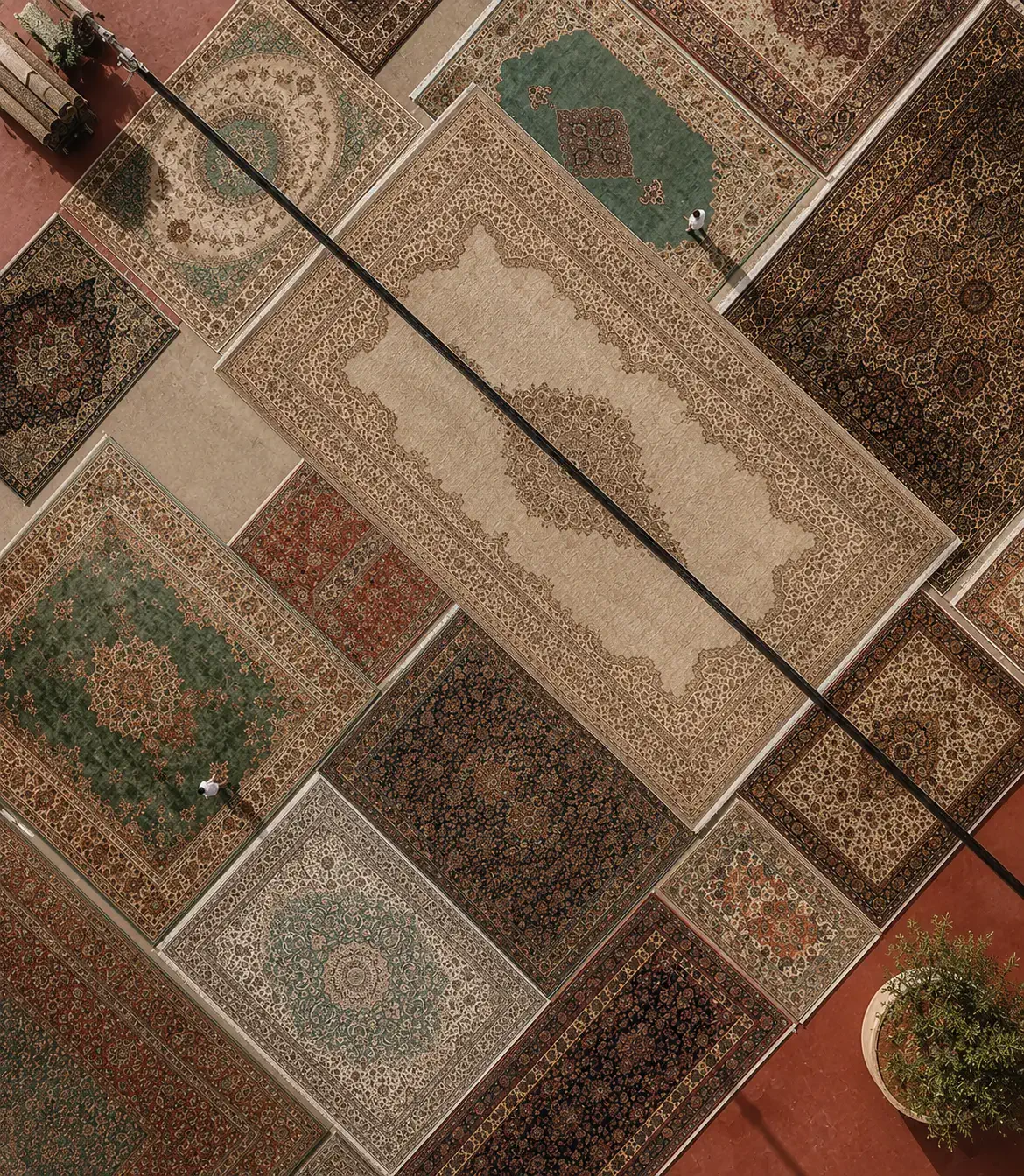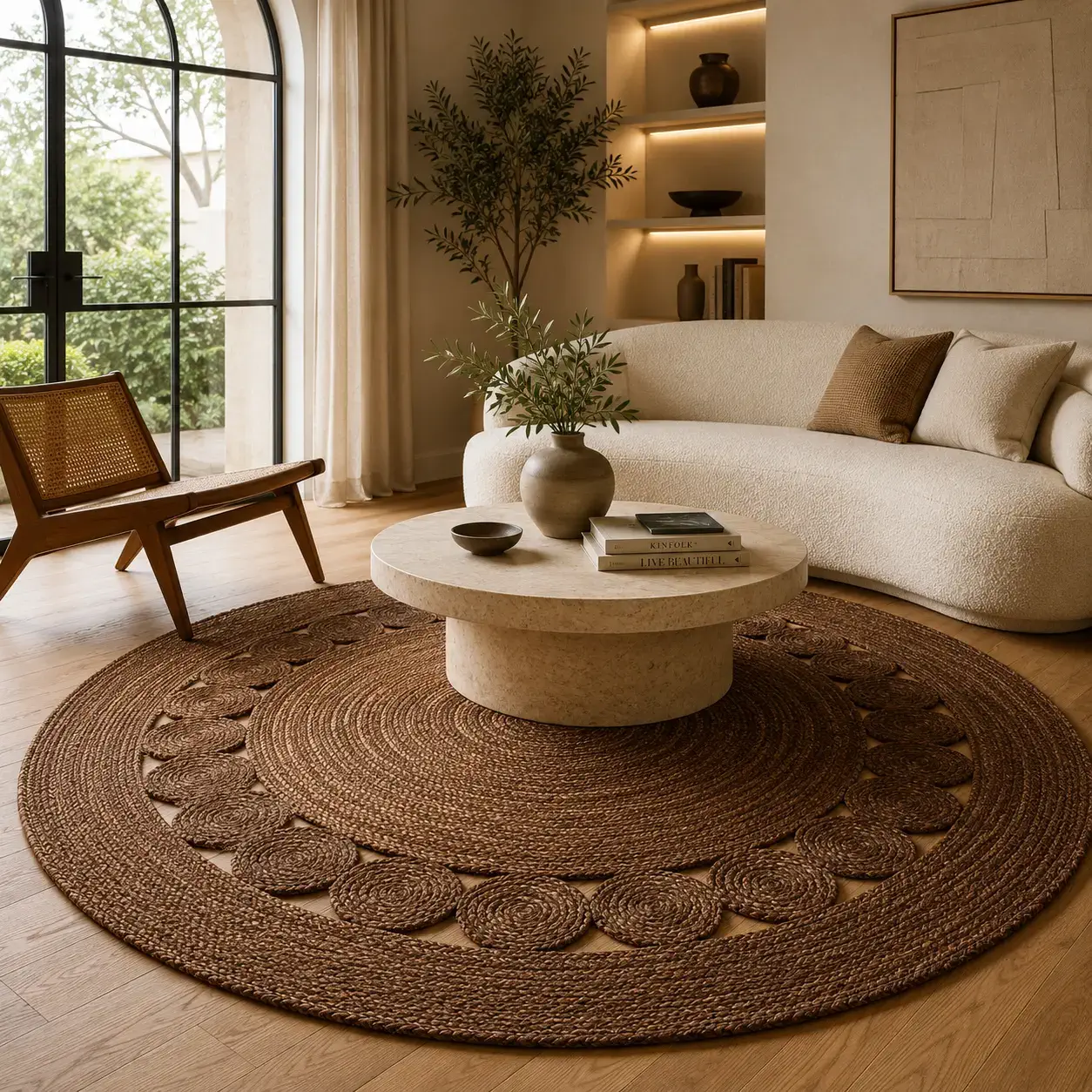
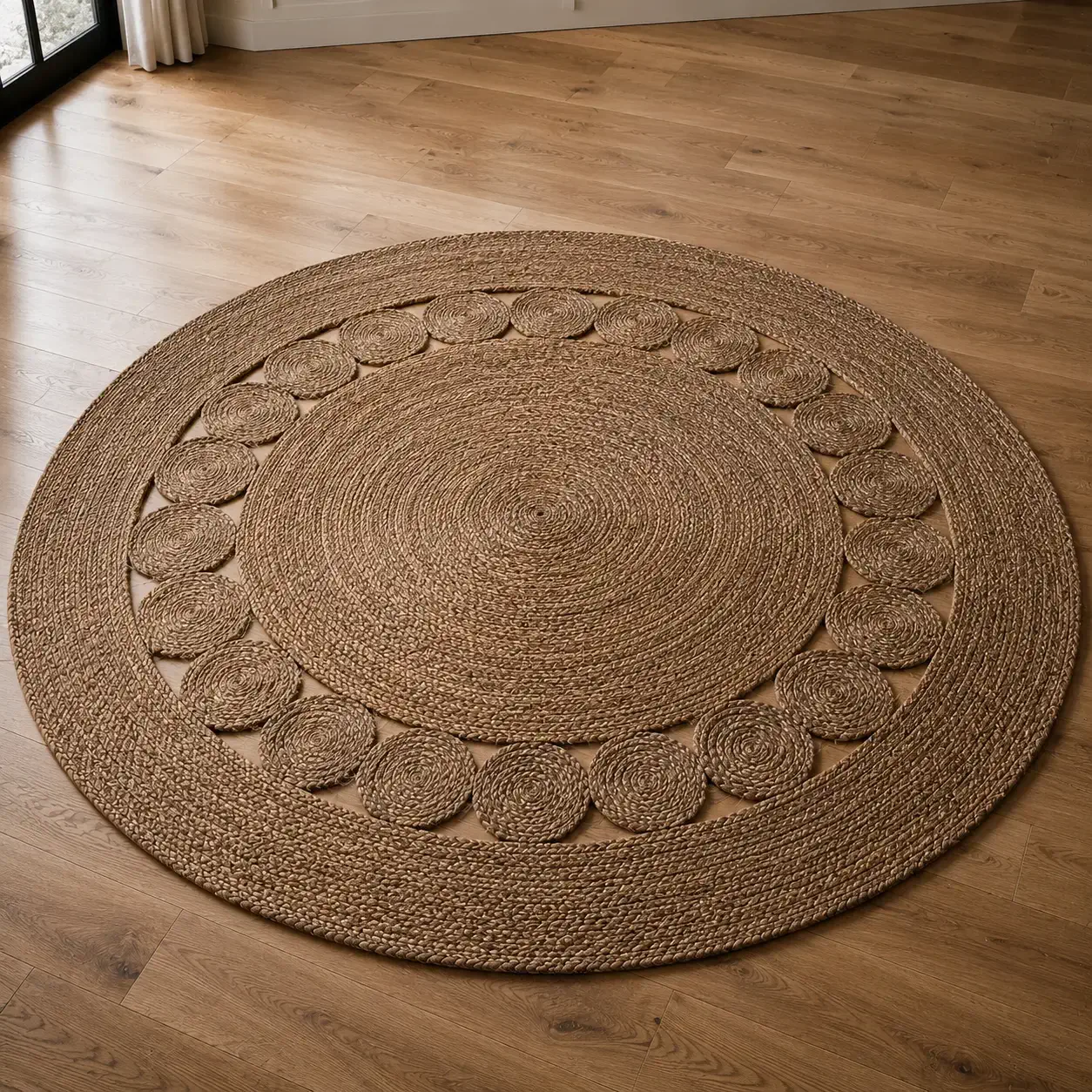
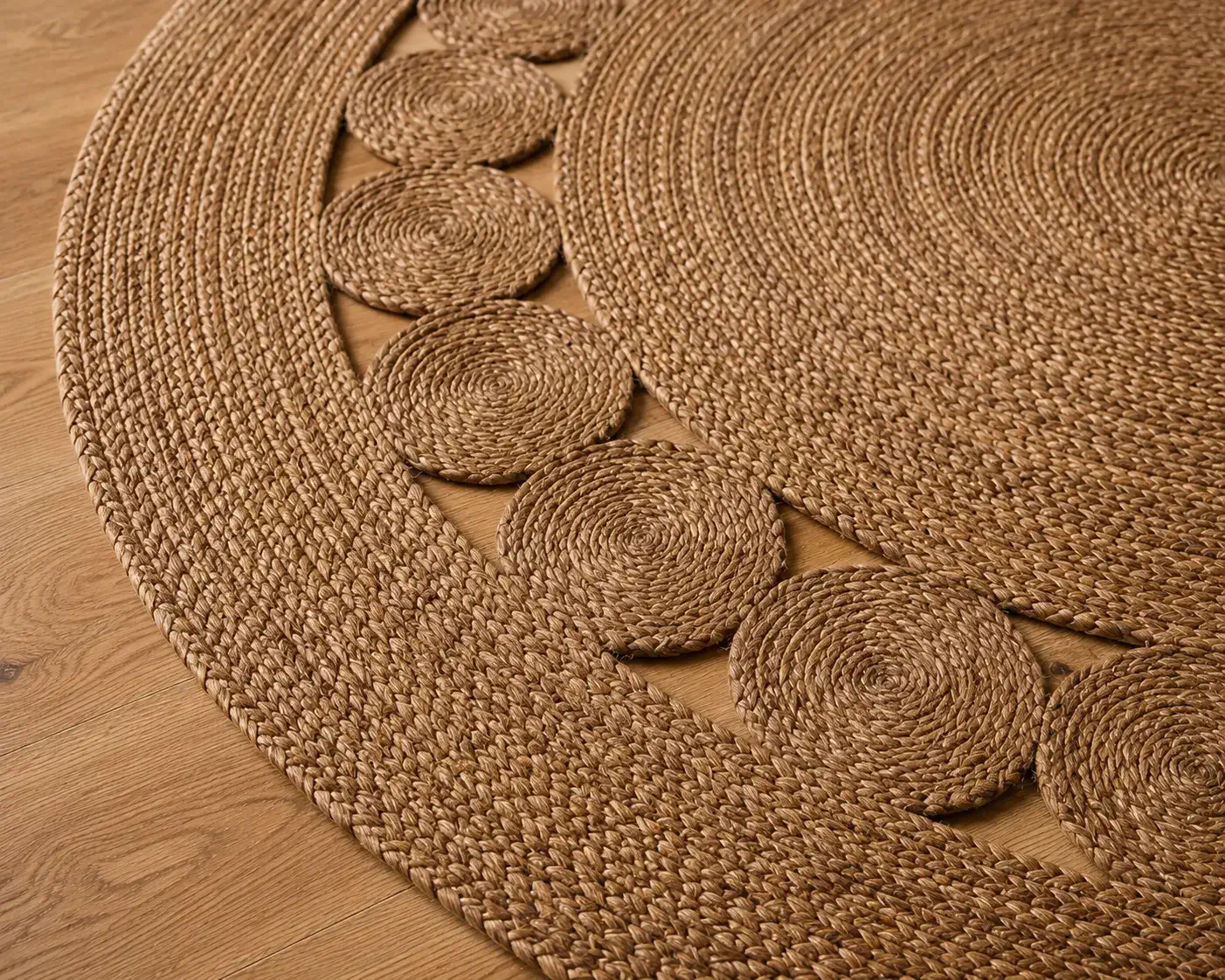
The circle is among the oldest forms in craft. In textile traditions from Central Asia to coastal India, round rugs have long marked the centre of a room — not as decoration, but as orientation. The Daaira takes that idea and introduces a deliberate tension: it splits the circle in two.
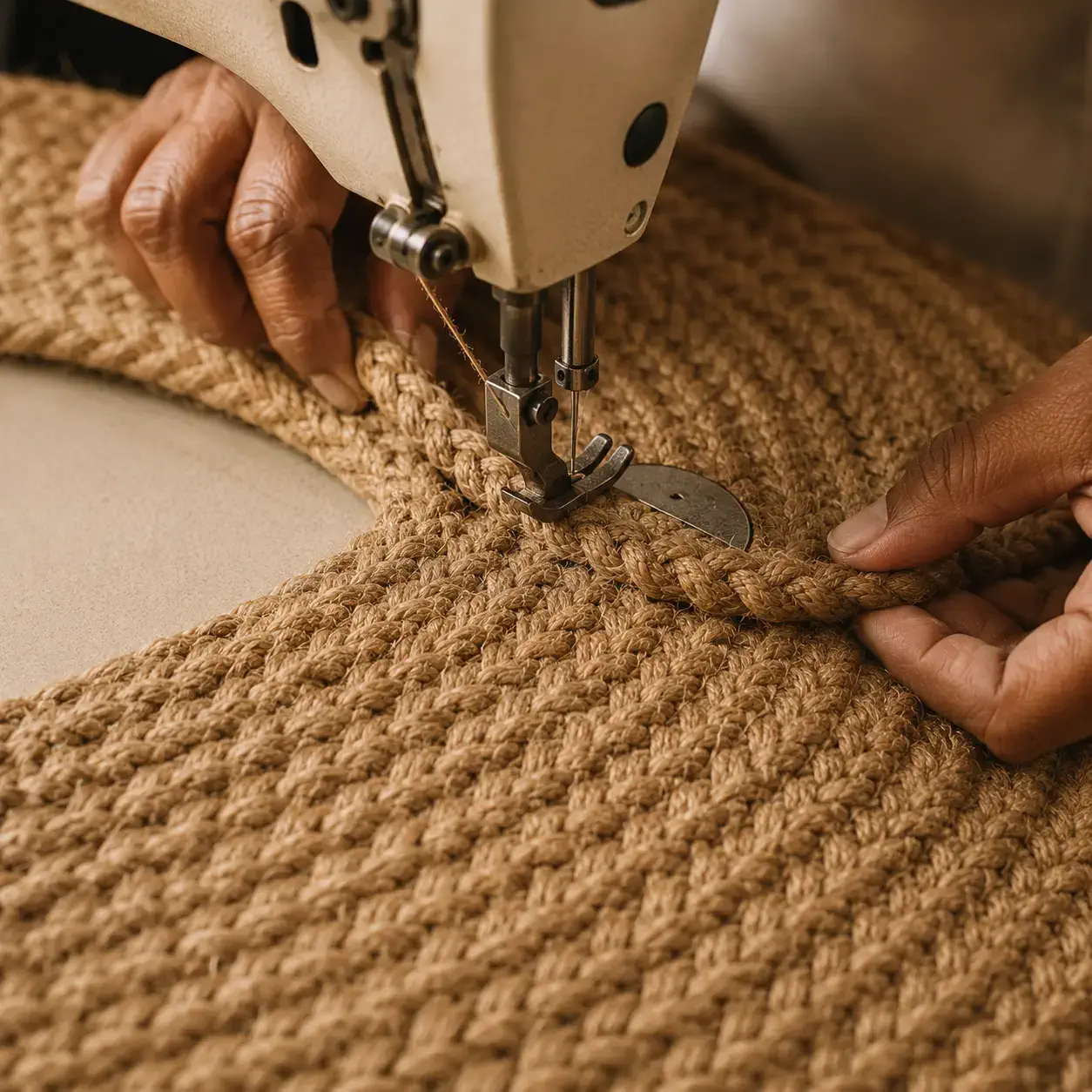
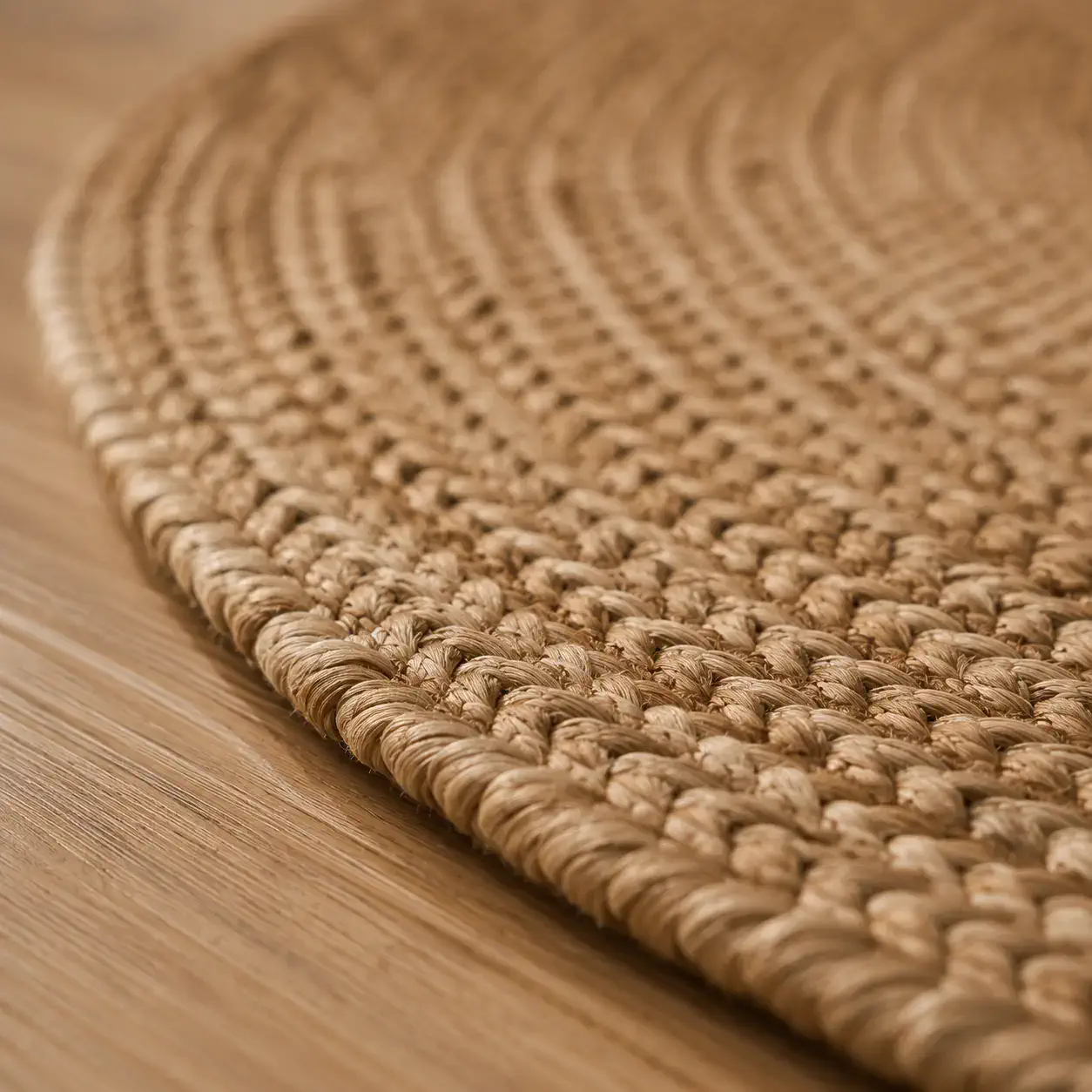
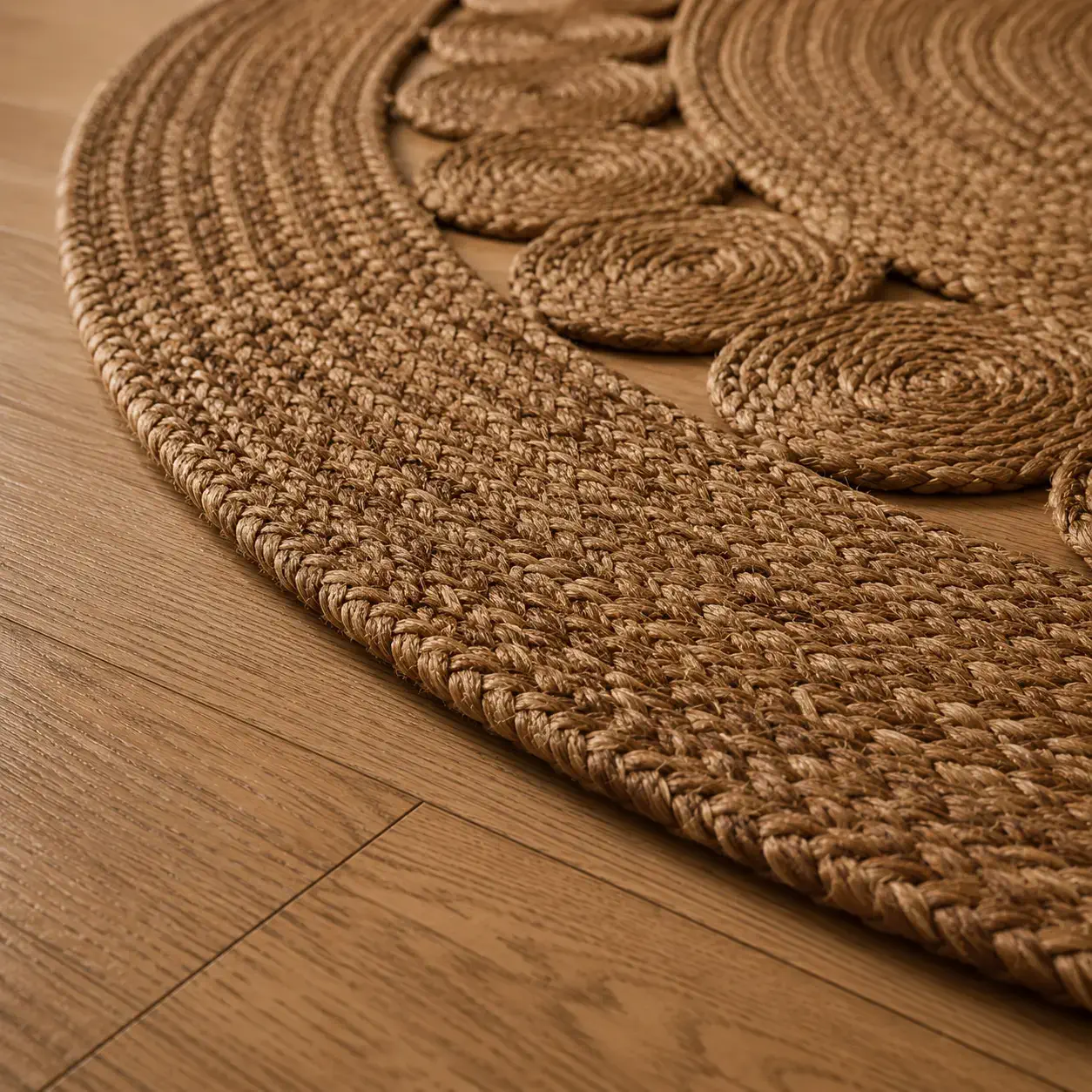
"The surface pattern is built entirely through the braiding itself — no dye applied after the fact, no screen-printed motif sitting on top of the weave."
Each ring of black emerges because a black-accent braid has been coiled into that spiral position and stitched flat beside the natural jute. The rhythm of the rings — tighter toward the centre, gradually widening as the spiral expands — is a consequence of the hand that made it. Two craftspeople working the same design will produce spirals that are subtly different. This is not inconsistency. It is the thing that makes each piece itself.
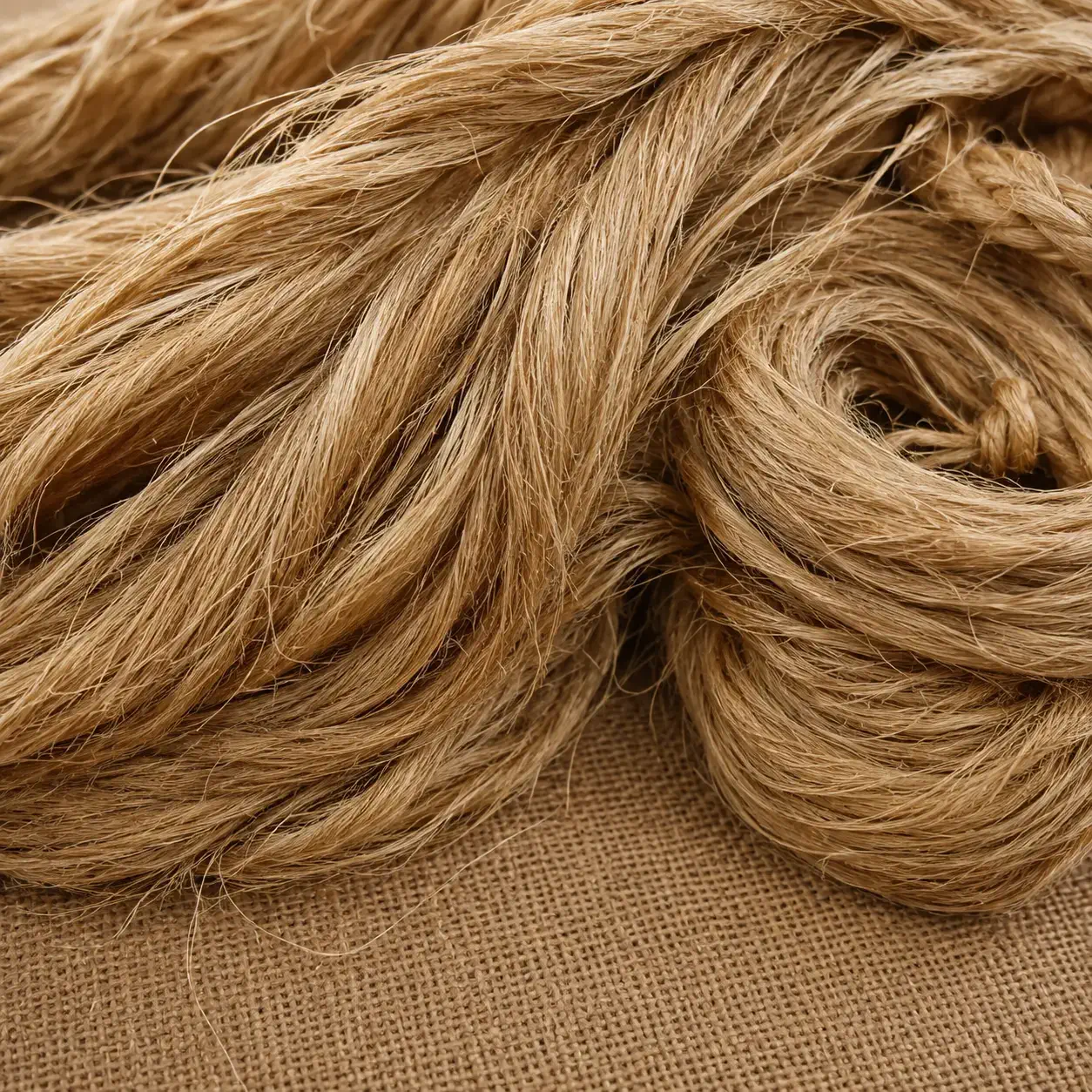
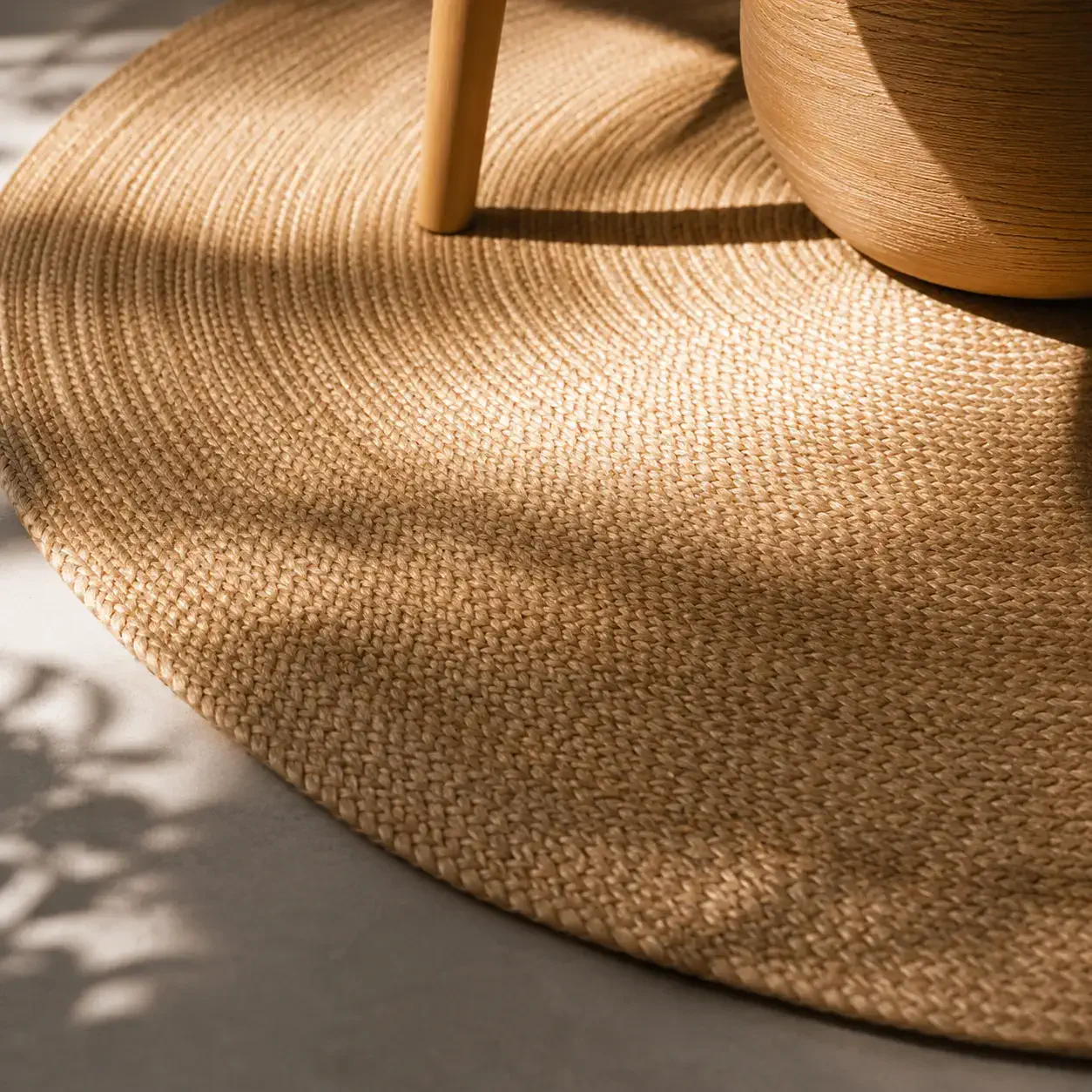
Natural jute has a quality that shifts between golden and amber depending on the light. In direct sunlight, the natural braid reads almost blonde. Under softer interior light, the same surface deepens toward honey. The wide outer border in plain undyed jute contains the spiral rather than competing with it — framing the design the way a mount frames a print.