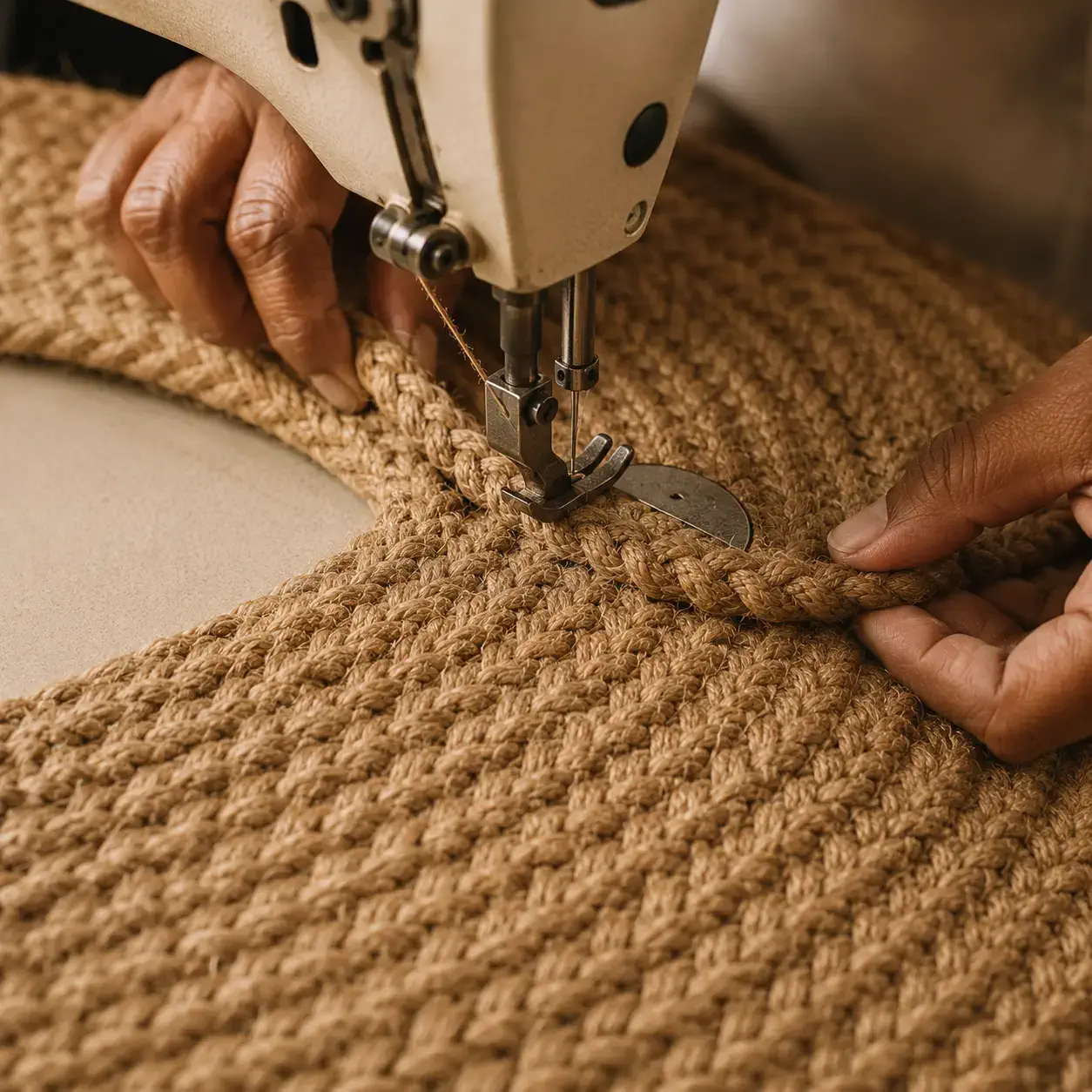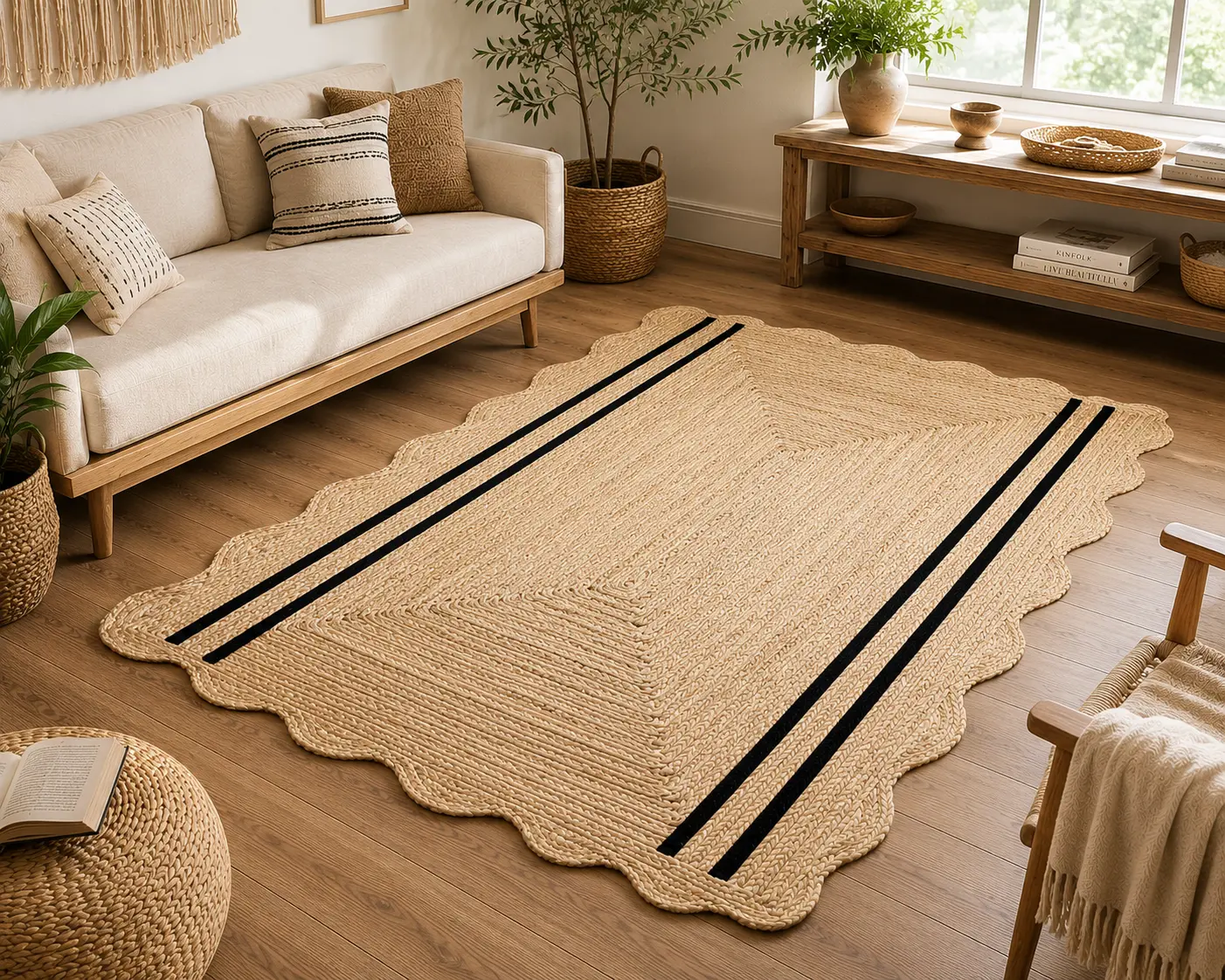
Naira takes its outline first. Rather than finishing at a straight cut edge, the braided coil is guided into a soft, repeating scallop around the full perimeter of the rug — a wave that turns a rectangular format into something considerably less rigid, closer to the hand-finished feel of a piece made one loop at a time.
"The scallop isn't added afterward — it's where the coil is allowed to curve outward before turning back in, so the edge and the field are built from the same continuous cord."
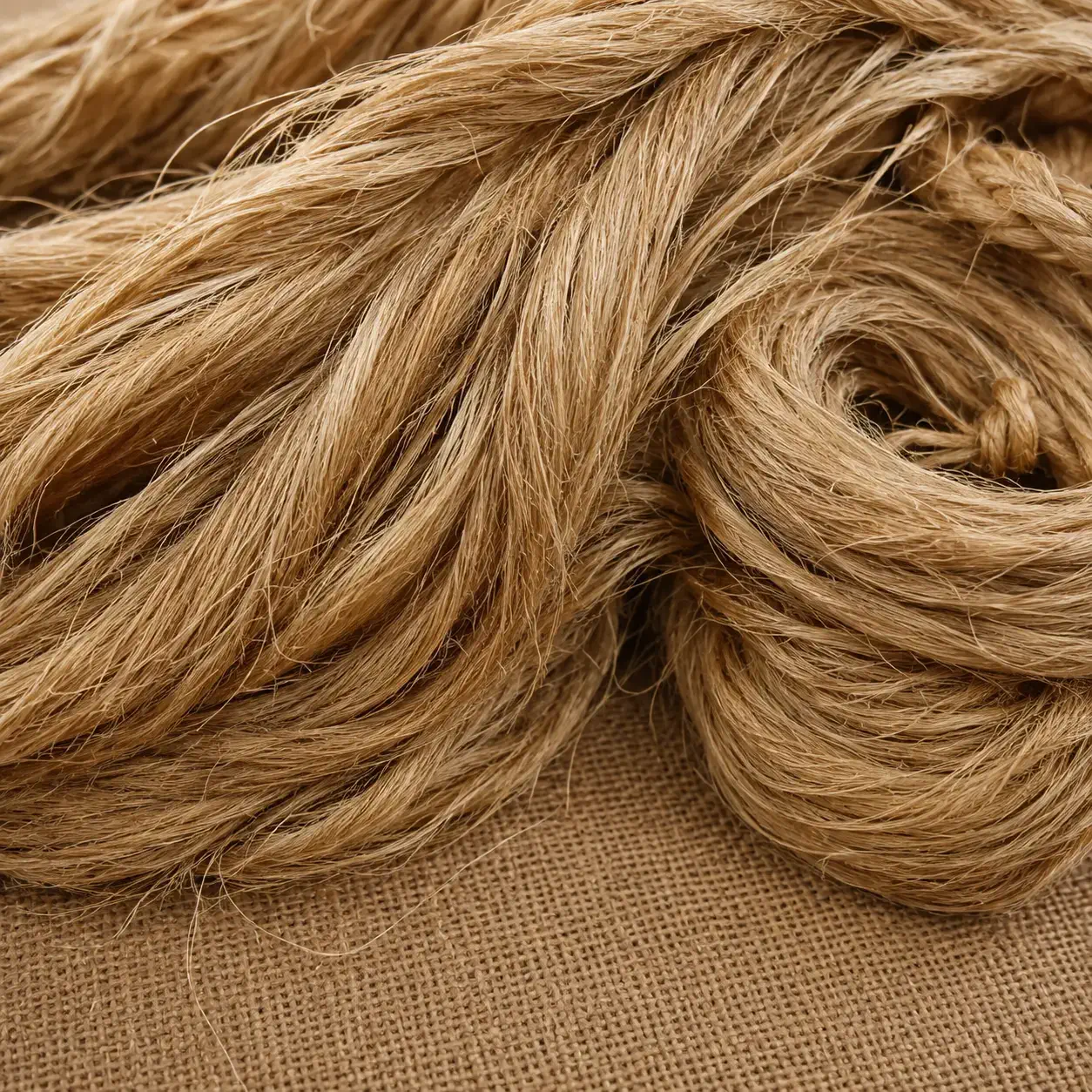
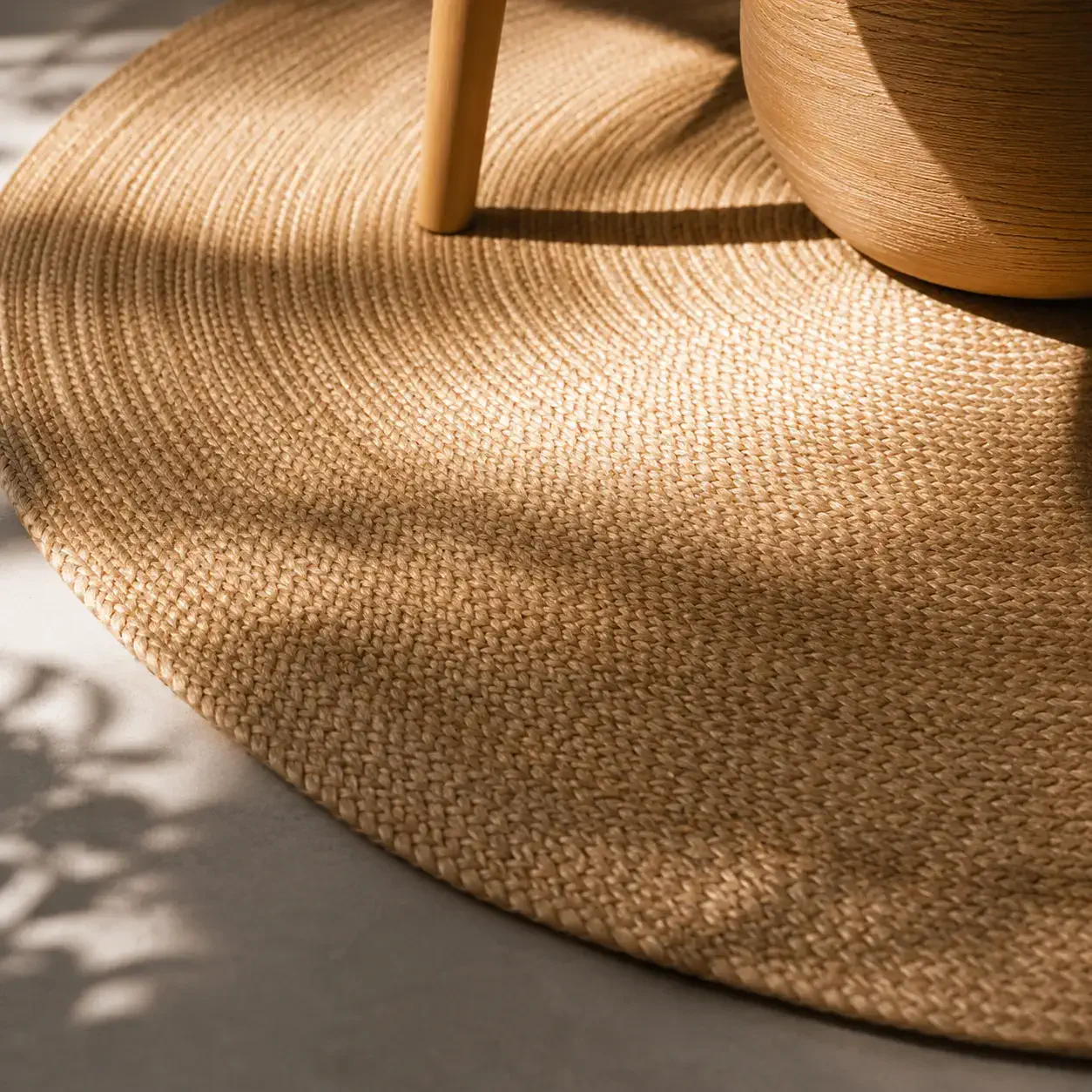
Within that softened boundary, the field itself is worked in the mitred, concentric manner typical of a braided jute rug — coils of natural fibre wound and stitched in bands that run parallel to the edge, gathering toward the centre. Two pairs of black linear stripes are set into this field along the length of the rug, a graphic, architectural counterpoint to the organic scallop and the warmth of the undyed jute.
Natural jute shifts in tone across the day — golden in direct light, deeper amber in shade — so the pale ground of Naira is never flat or uniform. Set against the black stripes and the wave of the scalloped edge, that natural variation gives the rug real depth underfoot, suited equally to considered residential interiors and hospitality spaces looking for a natural-fibre floor piece with a more contemporary silhouette.